
Piano moving is one of those tasks that looks simple until you try it. Even a small upright can weigh 300–500 pounds, while grand pianos can exceed 1,200 pounds. Beyond sheer weight, there’s the risk of damaging delicate internal parts, scratching finishes, or injuring yourself or your helpers. Whether you’re shifting a piano across the room or across town, understanding the right techniques and tools is the key to moving safely without damage.
This guide walks you through how piano moving is really done—step by step—so you can decide when a DIY move is realistic and when to hire professionals.
Why Piano Moving Is So Risky
Pianos are unusual objects to move because they combine:
- Extreme weight – Uprights: 300–600 lbs; baby grands: 500–700 lbs; full grands: 800–1,200+ lbs.
- Awkward dimensions – Tall, narrow, and top-heavy (uprights) or long and unbalanced (grands).
- Delicate mechanisms – Over 10,000 moving parts, strings under high tension, and sensitive action.
- Fragile external surfaces – High-gloss finishes and veneers that scratch easily.
A poorly planned piano move can lead to:
- Cracked soundboards or broken legs
- Bent pedals or damaged casters
- Gouged floors and walls
- Back, shoulder, or knee injuries
Professional piano moving companies train specifically to avoid these outcomes; if you decide to do it yourself, you’ll need to think like a pro.
Step 1: Decide If DIY Piano Moving Is Right for You
Before renting a truck or gathering friends, evaluate these four factors:
-
Piano type and size
- Spinet/console upright (short uprights): Most manageable for DIY.
- Full upright/studio upright: Heavy but still possible with experience and enough help.
- Baby grand or grand: Usually best left to professional piano movers.
-
Path complexity
- No stairs, few tight turns, wide doorways: DIY is more realistic.
- Multiple flights, tight corners, or elevators: Strong case for hiring specialists.
-
Number and strength of helpers
- At least 3–4 able-bodied adults for uprights.
- Grand pianos often need 4–6 movers with experience.
-
Value of the piano
- High-end or sentimental instruments are rarely worth the risk of amateur mistakes.
If any of these factors look challenging, consider getting a quote from a specialist in piano moving. The cost is often lower than repairing damage or medical bills.
Step 2: Gather the Right Piano Moving Equipment
Professionals never move a piano “with bare hands” alone. The correct equipment is non-negotiable:
- Piano dolly (four-wheel): Heavy-duty, rated for at least 800–1,000 lbs.
- Piano skid board (for grands): To hold the body of the piano once the legs are removed.
- Moving blankets / furniture pads: To protect the finish and your walls.
- High-quality ratchet straps: To secure the piano to the dolly or skid.
- Packing tape or stretch wrap: To keep blankets in place (never put adhesive directly on the finish).
- Work gloves with good grip: For control and hand protection.
- Floor protection: Ram board, cardboard sheets, or moving runners.
- Measuring tape: To confirm clearances through doors, hallways, and stairwells.
If you rent a truck, request a ramp and tie-down points inside the truck. Many rental companies also offer piano dollies for a small additional fee.
Step 3: Prepare Your Piano for Moving
Secure the Lid and Keyboard
- Close and lock the keyboard lid if your piano has a lock. If there’s no lock, tape the lid over a blanket, not directly to the wood.
- On grands, close and secure the main lid. Use straps and blankets to keep it from opening during the move.
Wrap and Protect the Finish
- Drape moving blankets over all exposed surfaces.
- Use stretch wrap or tape over the blankets to keep them in place.
- Pay special attention to:
- Corners
- Edges of the lid
- Front panel and sides
Protecting the finish isn’t just cosmetic—deep scratches or chipped veneer can hurt the piano’s value significantly.
Step 4: Plan the Route in Detail
Most piano moving damage happens not during the lift itself, but when a mover discovers an unexpected obstacle mid-route.
Walk the exact path from start to finish:
- Measure doors and hallways – Check height and width.
- Note corner turns – Make sure the piano can pivot without scraping walls.
- Check flooring – Identify slick surfaces, loose rugs, or thresholds.
- Inspect stairs or landings – Ensure they can accommodate the piano’s dimensions and your team.
Then:
- Remove doors from hinges if needed to get extra clearance.
- Take down wall art, mirrors, or anything fragile along the path.
- Roll up rugs or secure them to avoid tripping.
- Lay down protective floor runners on the route.
Sketching a quick floor plan with dimensions can help your team visualize how the piano will rotate or tilt through tight spots.
Step 5: How to Move an Upright Piano Safely
Uprights are “simpler” for piano moving but still require technique and teamwork.
Lifting Onto the Dolly
- Position the dolly centered under the piano’s weight, generally toward the middle back.
- Have one person on each side and, if possible, one stabilizing at the back.
- On a coordinated count:
- Tilt the piano slightly backward, off its front casters.
- Slide the dolly under, aligned lengthwise.
- Lower gently so the piano rests solidly on the dolly, not just on the casters.
Never rely solely on small built-in wheels to move the piano long distances—they’re designed for minimal repositioning, not full relocation.
Securing and Moving
- Use ratchet straps to secure the piano to the dolly without overtightening against delicate parts.
- Move slowly and steadily, with spotters at both ends.
- Communicate using clear, agreed-upon commands: “Stop,” “Step,” “Tilt,” “Corner.”
- When navigating thresholds or small steps:
- Approach straight-on.
- Lift slightly to clear the threshold and roll forward as a unit.
Avoid sudden stops or sharp turns; they can throw off balance and put stress on the frame.
Step 6: How to Move a Grand or Baby Grand Piano
Grand pianos are more complex and typically should be handled by professional piano moving specialists. However, understanding the process helps you evaluate whether your movers know what they’re doing.
Disassembly Steps (High-Level Overview)
- Remove the lyre (pedal assembly), if necessary, and wrap it carefully.
- Remove the legs:
- Support the body of the piano with multiple movers.
- Unscrew and gently detach each leg, one at a time.
- Place the piano on a skid board:
- Turn the instrument onto its side (keyboard facing in) while fully supported.
- Rest it securely on a padded piano skid board.
- Wrap and secure:
- Cover the body, legs, and lyre with moving blankets and secure with straps.
- Strap the piano firmly to the skid board.
Once prepared, the skid board is then placed on a heavy-duty dolly, and the process is similar to moving an upright: slow, controlled, and carefully guided through the planned route.
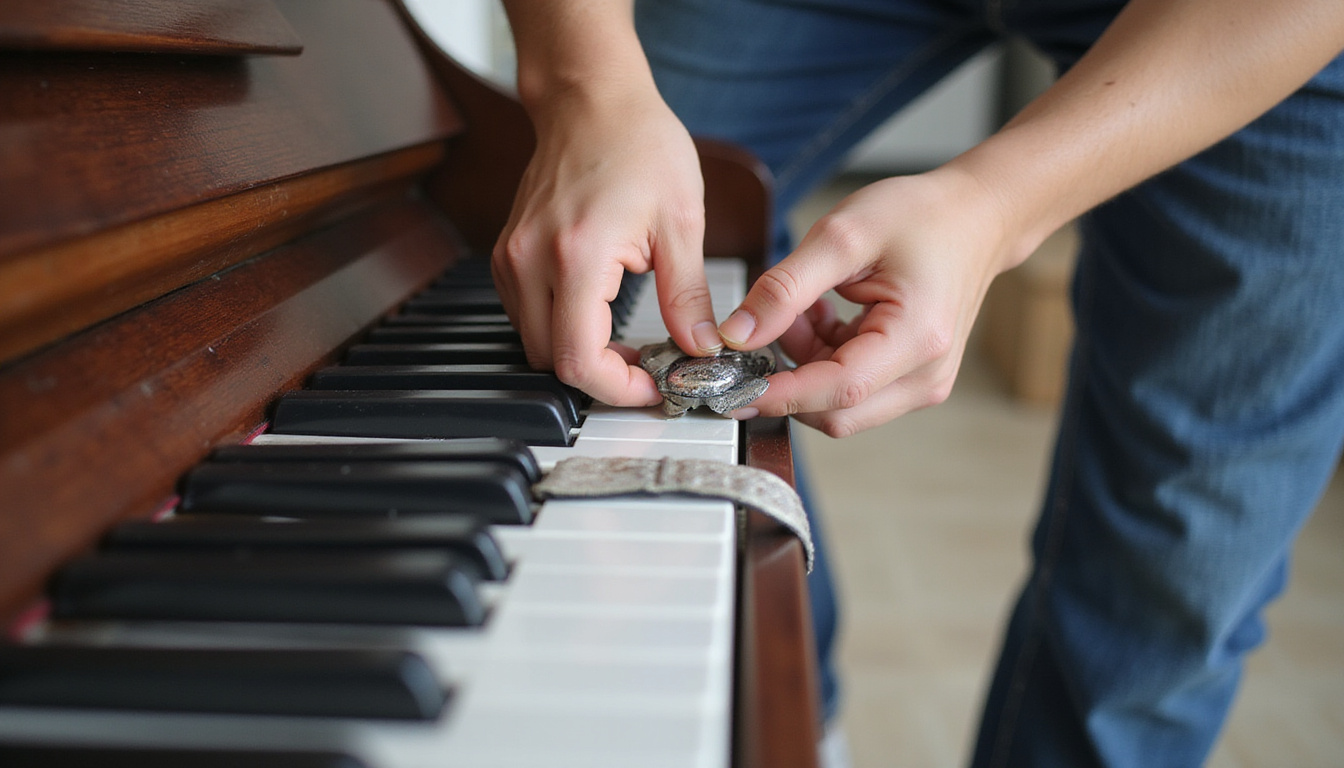
Because grands are both heavy and precision-built, improper disassembly can cause costly and sometimes irreparable harm. If you lack experience with piano moving of grands, hire a specialist.
Step 7: Stairs, Ramps, and Truck Loading
Moving a Piano on Stairs
Stairs are where most DIY piano moving attempts go wrong. Risks include:
- Loss of control and dangerous sliding
- Cracked steps or damaged railings
- Severe injuries if the piano shifts suddenly
Best practices:
- Use at least three movers on stairs: two below, one above (more for larger instruments).
- Move one step at a time, pausing to re-balance as needed.
- Keep the piano tilted minimally—enough for clearance without stressing the frame.
For long or complex staircases, professional movers will often use specialized ramps, winches, or hoists. If your move involves multiple flights, reconsider DIY.
Loading Into the Truck
- Position the ramp securely.
- Roll the piano up the ramp with at least two helpers pushing and one pulling/steering.
- Inside the truck:
- Park the piano against a front or side wall, not free-floating in the middle.
- Use heavy-duty straps to anchor it to tie-down points on both sides.
- Place additional pads or cardboard between the piano and the truck wall to prevent rubbing.
Never stack items on top of the piano, even if it’s wrapped; weight and vibration can cause hidden internal damage.
Step 8: After the Move – Let the Piano Settle
Once you’ve arrived and placed the piano in its new location:
- Remove all wrapping carefully to avoid scratching the finish.
- Check that legs, pedals, and casters are stable and level.
- Position the piano away from:
- Direct sunlight
- Radiators or heat vents
- Exterior doors or drafty windows
Because pianos are sensitive to changes in temperature and humidity, expect it to go slightly out of tune after a move. Most technicians recommend waiting 2–4 weeks for the instrument to acclimate before tuning (source: Piano Technicians Guild).
Common Mistakes to Avoid in Piano Moving
To protect both your instrument and your body, steer clear of these frequent errors:
- Using too few people – Overconfidence is a major cause of injuries.
- Relying on built-in casters – They’re small, fragile, and can damage floors.
- Not measuring first – Getting stuck in a hallway or stairwell can be a nightmare.
- Skipping protective padding – One unprotected corner can gouge both the piano and the wall.
- Ignoring your limits – If anyone feels unsafe at any point, stop and reassess.
Cost Considerations: DIY vs. Professional Piano Moving
When comparing DIY to hiring professional piano movers, factor in:
- Equipment rental costs (dollies, skid board, truck, pads).
- Number of helpers and the time you’ll spend planning and executing.
- Risk of damage to a potentially valuable instrument.
- Risk of personal injury, which can be far more costly than any moving fee.
Professional piano moving services are typically priced based on:
- Piano type and size
- Number of stairs or complexity of the route
- Distance between locations
- Any special handling (craning, long carries, etc.)
For many owners, especially with grands or high-end uprights, the peace of mind is worth the investment.
FAQ: Piano Moving Questions Answered
Q1: How much does professional piano moving usually cost?
Costs vary by region and complexity, but local upright moves often range from $200–$500, while grand piano moving or long-distance moves can be $400–$1,000+. Stairs, difficult access, and special equipment increase the price.
Q2: Can I move a piano in a pickup truck if I secure it well?
It’s strongly discouraged. Pianos are highly susceptible to weather, vibration, and shifting in an open bed. Proper piano movers use enclosed trucks with ramps and tie-downs designed for large, fragile items.
Q3: Do I need to tune my piano immediately after moving it?
You should expect to tune the piano within 2–4 weeks after moving. Let it adjust to the new room’s climate first; tuning too soon may be wasted if the instrument continues to settle.
Ready to Move Your Piano Safely?
Successfully handling piano moving on your own demands planning, the right tools, and disciplined teamwork. For smaller uprights, a careful, well-prepared DIY move can work. But for larger instruments, stairs, or tight spaces, trusted professional piano movers are often the safest, most economical option in the long run.
If you’re preparing for a move, start by mapping your route, gathering equipment, and honestly assessing the risks. When in doubt, reach out to a specialist moving company for an estimate. Your back, your walls, and—most importantly—your piano will thank you for choosing the safest path.
Junk Guys Inland Empire
Phone: 909-253-0968
Website: www.junkguysie.com
Email: junkguysie@gmail.com