
Planning a renovation often starts with one deceptively hard task: tile removal. Whether you’re updating a dated bathroom, replacing cracked kitchen tiles, or prepping for new luxury vinyl or hardwood, how you remove the old tile can make or break the entire project. Done right, you’ll protect your subfloor, save time, and avoid expensive fixes. Done wrong, you risk damage, dust everywhere, and delays that blow your budget.
Below is a practical, people-first guide to tile removal that walks you from prep to cleanup, with specific tips to help you avoid costly flooring mistakes.
1. Decide: DIY tile removal vs. hiring a pro
Before touching a tile, decide who’s doing the work. This decision alone can save you a lot of time and money.
When DIY tile removal makes sense
Consider doing it yourself when:
- The area is relatively small (e.g., a small bathroom, entryway, or kitchen backsplash).
- The tile is already loose, cracked, or poorly adhered.
- The subfloor is concrete, not wood, and you’re comfortable using power tools.
- You have time to work methodically and clean up.
With the right tools and safety steps, many homeowners can successfully handle small to medium tile removal projects.
When you should hire a professional
Hire a pro if:
- You suspect asbestos in old adhesives, linoleum layers, or backing (typical in homes built before the 1980s).
- The tiled area is large (entire main floor, big open-plan space).
- You have radiant heat in the floor that you cannot afford to damage.
- The tile is on a second-story wood subfloor and you see signs of movement, flex, or water damage.
- You’re on a tight timeline and delays would be expensive or disruptive.
Pros have dust-control systems, demolition hammers, and experience with tricky subfloors. In some cases, paying for professional tile removal is cheaper than fixing a destroyed subfloor or damaged plumbing and wiring under the floor.
2. Safety and preparation: Don’t skip this part
The two biggest DIY tile removal mistakes are skipping safety gear and underestimating the prep work. Both can turn a simple project into a health hazard and a huge mess.
Essential safety gear
Tile removal involves flying sharp shards, heavy debris, and potentially silica dust (fine dust from cement-based mortar and grout, which can damage your lungs). At minimum, use:
- Eye protection (sealed safety goggles)
- Heavy-duty gloves (cut-resistant)
- NIOSH-approved respirator or dust mask (P100 or N95 as a minimum)
- Long sleeves, long pants, and sturdy shoes or boots
- Hearing protection if using power tools
Silica dust exposure is a documented health risk and regulated in many workplaces (source: OSHA). Treat your home project with the same seriousness.
Prep the space like a pro
Good prep work makes tile removal faster and safer:
-
Clear the room completely
Remove furniture, rugs, and appliances. If you must keep something in the room, cover it tightly with plastic. -
Protect adjacent areas
- Seal doorways with plastic sheeting and painter’s tape.
- Close HVAC vents and seal them with plastic to keep dust out of your ducts.
- Lay down rosin paper or cardboard in hallways and other finished floors to protect them from debris.
-
Turn off utilities if needed
If tiles are near plumbing fixtures, gas lines, or electrical floor outlets, consider shutting off those lines while you work. -
Plan debris removal
Rent or borrow heavy-duty buckets or a small dumpster. Tile is surprisingly heavy—plan how you’ll carry it out without damaging stairs or other flooring.
3. Identify your subfloor and tile installation type
Understanding what’s under your tile helps you choose the right removal method and avoid hidden damage.
What’s under your tile?
Common setups:
-
Concrete slab
Very common in basements and on-grade floors. Tough, less prone to flexing, and generally the easiest to prep after tile removal. -
Plywood subfloor with cement board (backer board)
Typical on second floors and wood-framed homes. Tile is installed on 1/4" or 1/2" cement backer board. You may remove tile and backer board together. -
Mud bed (thick mortar bed)
Older installations may have a thick cement “mud bed” under the tile. These are very durable and can be harder to remove, but they provide a stable base. -
Radiant heated floors
Electric or hydronic heating systems in or under the tile. These require extreme caution; damaging them can be very costly.
Adhesive and grout clues
- Thinset mortar (gray or white, hard, cement-like): Most common under floor tile. Requires chisels, hammers, and sometimes grinders to remove.
- Mastic (softer, often beige): More common on walls or backsplashes. Easier to scrape off than thinset.
- Epoxy mortar or grout: Extremely hard and chemical-resistant. Much harder to remove; often best left to pros.
Knowing what you’re dealing with helps you choose tools and avoid over-aggressive methods that destroy the subfloor.
4. Tools and techniques for efficient tile removal
Having the right tools is half the battle. You don’t need to buy everything; tool rental centers are a great option.
Recommended tools
- Pry bar (flat and curved)
- Hammer or small sledgehammer
- Cold chisel or masonry chisel
- Floor scraper (manual or with long handle)
- Oscillating multi-tool (for cutting along edges and around fixtures)
- Demolition hammer with tile scraper attachment (for large areas)
- Shop vacuum with HEPA filter
- Buckets or debris bags (contractor-grade)
Step-by-step tile removal process
-
Start at a weak point
Look for cracked or loose tiles, or an edge by a threshold or floor vent. If everything is solid, you may need to break one tile in the middle with a hammer and chisel to create a starting point. -
Remove the first tile carefully
- Score grout lines around a tile with an oscillating tool if needed.
- Use a chisel at a low angle to pry under the tile, tapping with a hammer.
- Once the first tile is out, you’ll have a gap to work from.
-
Work in small sections
Use your chisel, pry bar, or demolition hammer to get under tiles and lift them. Work methodically, clearing debris into buckets as you go. -
Watch for subfloor damage
If plywood starts to splinter or you see screws/nails pulling up with the tile, slow down. Adjust your angle or tool. In some cases, it’s easier and smarter to remove tile plus cement board as one unit, then install new backer board. -
Remove thinset or adhesive
After the tiles are gone, you’ll likely have a rough layer of thinset. Options:- Manual scraping with a floor scraper
- Using a chipping hammer attachment
- Grinding with a concrete grinder (for concrete slabs only, with dust control)
You need a relatively smooth, clean surface for new flooring, especially if you’re installing vinyl, laminate, or hardwood.
5. Common tile removal mistakes that cost money
Knowing what not to do is just as important as knowing how to do it.
1. Ignoring potential asbestos or lead
- Old vinyl tiles, mastics, and some backings may contain asbestos.
- Old paint on nearby trim and walls may contain lead.
If your house was built before 1980 and you’re unsure, get suspect materials tested before disturbing them. Asbestos and lead require specialized, regulated removal.
2. Damaging the subfloor
A compromised subfloor can lead to:
- Squeaks and flexing under new flooring
- Cracked grout or tiles in your new installation
- Voided manufacturer warranties for new flooring
Common causes of damage:
- Using a demolition hammer on high power too aggressively on wood subfloors.
- Driving chisels too deep and gouging plywood.
- Ignoring water-damaged, soft, or moldy areas instead of replacing them.
If plywood is soft or darkened, cut out and replace the damaged sections before installing new flooring.
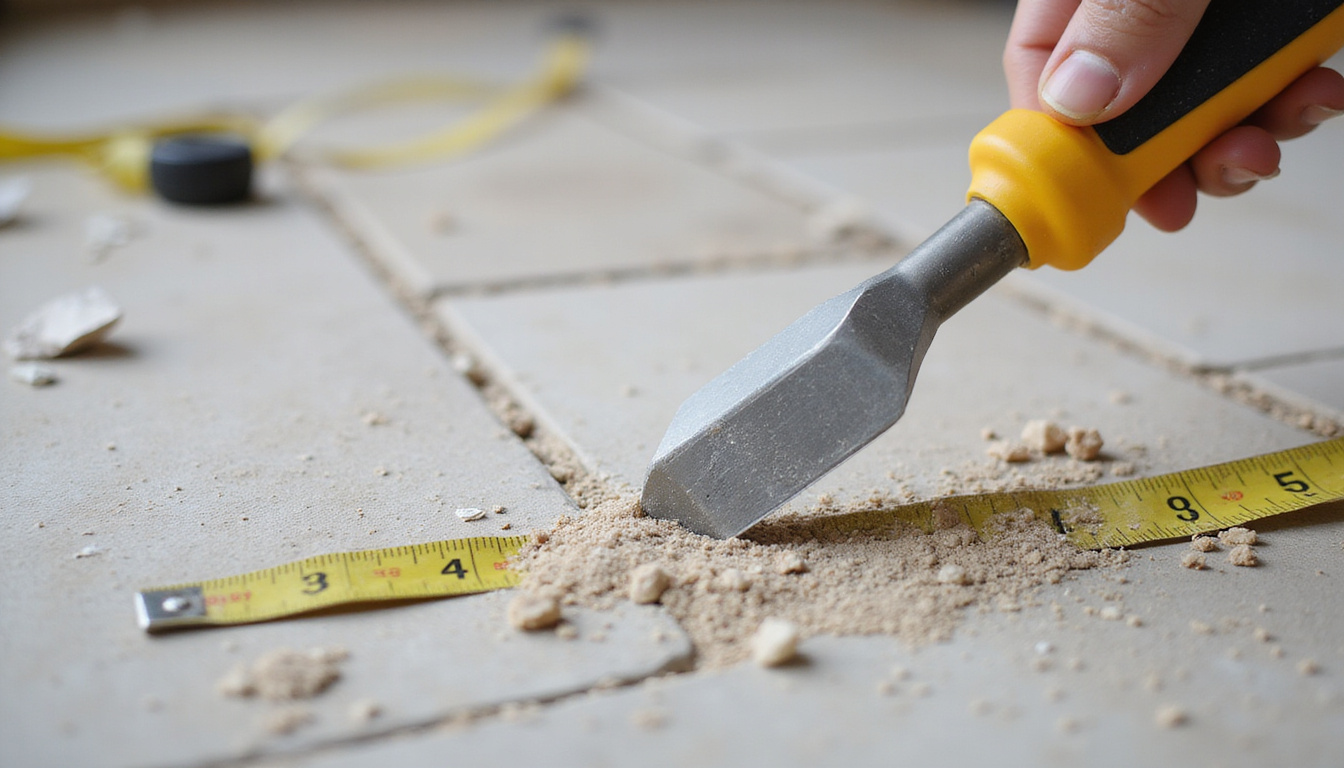
3. Leaving behind uneven thinset
For carpet and some tile installs, minor ridges might not be a problem. For vinyl plank, floating floors, or glued-down materials, they are. High spots telegraph through, especially with thinner flooring, causing:
- Visible bumps and ridges
- Premature wear or separation
- Clicking and movement underfoot
Use a straightedge to check the floor. Grind or scrape high spots; fill low spots with appropriate floor-leveling compound.
4. Poor dust control
Dust can:
- Clog HVAC systems
- Spread to every room
- Pose health risks (silica exposure)
Use:
- Sealed doorways and vents
- A shop vac with HEPA filter
- Wet methods where possible (slightly misting surfaces before scraping)
Avoid dry grinding indoors without dust collection.
5. Rushing the timeline
Homeowners often underestimate how long tile removal will take:
- A small bathroom: 1 day for careful DIY removal and cleanup.
- Medium kitchen: 1–2 days.
- Large open area: Several days for DIY, or 1 day with a pro crew and proper tools.
If you’ve scheduled installers for new flooring too soon, you might pay rescheduling fees or rush critical prep. Build buffer time into your project plan.
6. Preparing the surface for new flooring
Tile removal is just phase one. Proper surface prep ensures your new floors last.
For new tile installations
- Remove almost all old thinset; new thinset needs a solid, clean, and mostly smooth base.
- Ensure the subfloor meets deflection requirements (tile needs a stiff, stable base).
- Consider fresh cement backer board or a membrane (like uncoupling or waterproofing membranes) if recommended by your tile installer.
For vinyl, laminate, or engineered wood
These products are more sensitive to subfloor imperfections.
- Follow the manufacturer’s flatness specs, often something like “no more than 3/16" variation over 10 feet.”
- Use self-leveling underlayment on concrete slabs that have dips or waves.
- On wood subfloors, screw down loose subflooring to eliminate squeaks, and patch seams or low areas.
For carpet
Carpet is relatively forgiving, but you still should:
- Remove sharp ridges and protruding thinset.
- Fix squeaky spots in wood subfloors.
- Ensure tack strips can be securely nailed or fastened.
7. Clean-up and disposal: Finishing the job right
Tile removal generates heavy, sharp debris:
- Use heavy-duty contractor bags, but don’t overload them—they’ll tear or be too heavy to lift.
- Double-bag small sharp pieces.
- Protect stairs and hallways when hauling debris out.
- Check local regulations or waste management guidelines for construction debris disposal; you may need to use a transfer station or rent a small dumpster.
Vacuum the area thoroughly with a shop vac. Then wipe surfaces with a damp cloth or mop to catch fine dust after you’ve completed the bulk cleanup.
FAQ: Common questions about tile removal
1. How much does professional tile removal cost?
Professional tile removal cost varies by region, tile type, and subfloor, but common ranges are $2–$6 per square foot. Complicating factors—like asbestos, radiant heat, or thick mud beds—can increase the price. Get at least two or three quotes and make sure dust control and debris disposal are included.
2. What tools do I need for DIY ceramic tile removal?
For DIY ceramic tile removal, plan on: safety gear, a hammer, chisels, pry bars, a floor scraper, an oscillating multi-tool, and a shop vac. For larger areas, renting a demolition hammer with a tile scraper attachment can dramatically speed up the work.
3. Can I install new flooring directly over old tile instead of removing it?
Sometimes you can perform tile removal alternatives by going over existing tile—if the tile is flat, firmly bonded, and compatible with the new flooring. Many floating floors (like laminate or click vinyl) can go over tile with the right underlayment. However, this can create height issues at doors and transitions, and it’s not ideal if the existing tile is loose or uneven. Always check the new flooring manufacturer’s installation guidelines.
Wrap-up: Make tile removal work for your renovation, not against it
Tile removal is dusty, noisy, and labor-intensive—but it sets the foundation for everything that comes next. By planning ahead, using proper safety and dust control, understanding your subfloor, and avoiding shortcuts that damage the surface, you’ll save time now and prevent expensive flooring problems later.
If you’re about to start a project, take stock of your space, tools, and comfort level. Decide whether DIY tile removal or hiring a professional makes the most sense. Then map out your steps—from prep to final clean-up—before you swing the first hammer.
When you’re ready, use this guide as your roadmap. And if you’d like help choosing tools, planning your subfloor prep, or deciding whether to remove or go over existing tile, reach out to a local flooring specialist or contractor today and turn your renovation vision into a durable, long-lasting reality.
Junk Guys Inland Empire
Phone: 909-253-0968
Website: www.junkguysie.com
Email: junkguysie@gmail.com