
Tree removal is one of those home or property projects that can go from manageable to very expensive in a hurry. Whether you’re dealing with a dead oak looming over your roof or clearing space for a renovation, making smart decisions about tree removal can save you hundreds—or even thousands—of dollars, while also preventing dangerous and costly mistakes.
Below, you’ll learn how pricing really works, when you can safely DIY, how to choose the right contractor, and the hidden pitfalls that catch many homeowners off guard.
When Is Tree Removal Really Necessary?
Not every problem tree has to come down. Sometimes pruning, cabling, or other care can solve the issue more safely and affordably.
Common reasons tree removal is recommended:
- The tree is dead or in rapid decline
- Large branches are dropping or visibly cracked
- The trunk is hollow or severely decayed
- The tree is leaning dangerously toward a structure or power line
- Roots are lifting foundations, sidewalks, or driveways
- The species is invasive or causing continual property damage
Before jumping to removal, consider getting an assessment from a certified arborist. They can tell you whether the tree is truly unsafe or if a less drastic (and cheaper) option will work.
What Really Affects Tree Removal Cost?
Understanding what drives the price puts you in a better position to compare quotes and avoid overpaying.
1. Size and Height
This is the biggest factor. Taller and wider trees require:
- More time to cut and lower safely
- Heavier-duty equipment
- Larger crews
In general, a small ornamental tree in an open yard costs far less than a massive oak overhanging your roof.
2. Location and Accessibility
Two trees of the same size can differ in cost purely based on location:
- Easy access (open lawn, truck can park nearby) = lower cost
- Difficult access (fenced yard, steep hill, backyard only reachable by narrow gate) = higher cost
Trees close to houses, sheds, fences, or pools also require more precise rigging to prevent damage.
3. Tree Condition
- Healthy but unwanted trees are often simpler to remove.
- Dead, decayed, or storm-damaged trees are more unpredictable and fragile, which increases risk and time.
Decay can make limbs or trunks break unexpectedly, so crews must work more slowly and carefully.
4. Nearby Hazards
Anything that makes removal riskier will nudge up the price:
- Power lines or service drops
- Septic systems or underground utilities
- Glass structures (sunrooms, greenhouses)
- Busy roads or sidewalks requiring traffic control
If power lines are involved, the utility company may need to coordinate or partially perform the work.
5. Add-On Services
The base quote for tree removal may not include everything you expect. Ask specifically about:
- Stump grinding or removal
- Hauling away logs, branches, and debris
- Log splitting or leaving firewood on-site
- Site cleanup and raking
- Permits or traffic control fees
You can save money by adjusting what’s included, as long as you know what you’re agreeing to.
How to Get Accurate—and Fair—Tree Removal Quotes
Getting three quotes isn’t enough if each company is pricing a different scope of work. Here’s how to keep comparisons apples-to-apples.
Ask the Right Questions
When you call or meet with a tree service, ask:
- Are you licensed and insured for tree removal in this area?
- Do you have workers’ compensation coverage for your employees?
- Who is responsible if there’s property damage?
- Is a certified arborist involved in evaluating or supervising the work?
- What exactly is included in this quote? (Stump grinding? Cleanup? Haul away?)
- How will you access the tree and protect my lawn and structures?
- Will you need to coordinate with the utility company?
- How long will the job take and when can you start?
The best companies give clear, detailed answers and don’t pressure you into a quick decision.
Get Written, Itemized Estimates
Insist on written estimates that break down:
- Tree removal cost
- Stump grinding cost (if applicable)
- Hauling/cleanup charges
- Any additional fees (permits, travel, equipment surcharges)
This makes it easy to compare, negotiate, or decide what you’re willing to handle yourself (like hauling wood).
Smart Ways to Save Money on Tree Removal
You don’t have to pick the cheapest company to keep costs reasonable. Use these tactics to lower your overall bill without sacrificing safety.
1. Bundle Multiple Trees
If you have more than one problem tree, have them evaluated at the same time. Many companies will offer a better per-tree rate for:
- Removing multiple trees in one trip
- Combining removal with pruning and shaping of other trees
- Scheduling stump grinding for several stumps at once
2. Be Flexible With Timing
Ask whether there’s an off-peak season or slower period. You may save by:
- Scheduling in late fall or winter in some regions
- Allowing the company to fit you in when they’re already in the neighborhood
- Opting for weekday work instead of weekends
3. Handle Some Labor Yourself (Safely)
You can sometimes trim costs by:
- Agreeing to handle cleanup and debris removal afterward
- Keeping the wood for firewood (have them cut it into rounds you can manage)
- Raking and final tidying on your own
Always let the contractor know up front; don’t interfere with their work or enter the area while they’re operating equipment.
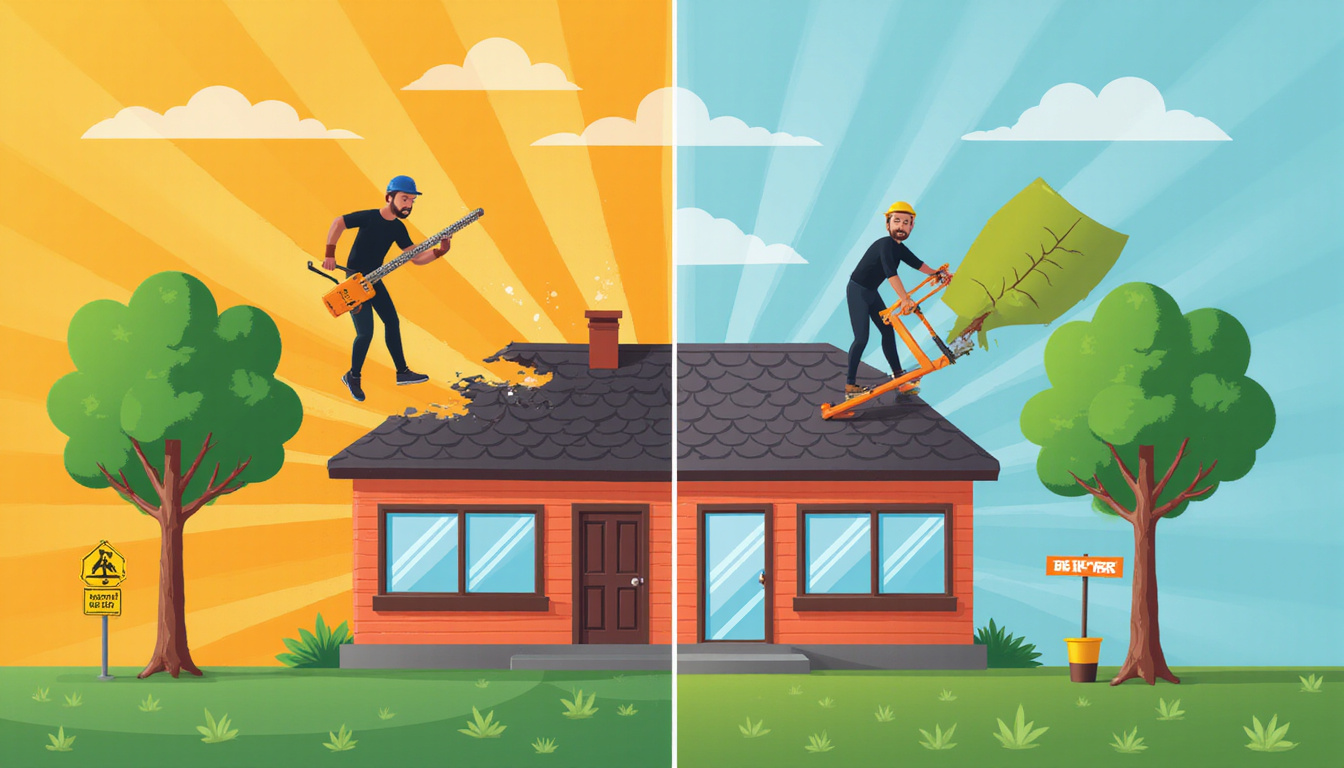
4. Get a Second Opinion Before Removing Large Trees
Big, mature trees add significant value to a property. A certified arborist may be able to:
- Treat disease or pests
- Prune and cable to reduce risk
- Manage roots with barriers or targeted removal
Spending a little on expert advice can prevent you from unnecessarily cutting down a valuable tree.
DIY Tree Removal: When It’s Safe—and When It’s Not
Doing the work yourself sounds like an obvious way to save money, but tree removal can be extremely dangerous without proper training and equipment.
DIY Might Be Reasonable If:
- The tree is small (often under 15–20 feet)
- It’s in an open area far from structures and power lines
- You have basic chainsaw experience and PPE
- You can safely control the direction of the fall
Even then, you should understand notching, back cuts, escape routes, and how to manage kickback and pinching.
Never DIY in These Situations
Do not attempt tree removal yourself if:
- The tree is near power lines
- It leans toward your home, car, or any structure
- It’s very tall or has large, heavy limbs
- It’s dead, decayed, or storm-damaged
- You need to climb, use ropes, or work at height
Professional tree crews use specialized techniques, ropes, harnesses, and rigging systems developed over years of experience. The risk of serious injury or property damage is high for untrained DIYers.
For perspective, tree work consistently ranks among the most hazardous professions according to occupational safety data (source: U.S. Bureau of Labor Statistics).
Permits, Regulations, and Insurance: What Many People Overlook
Skipping the paperwork or assuming your insurance covers everything can lead to expensive surprises.
Check Local Tree Removal Regulations
Depending on your city or HOA, you may need:
- A permit to remove trees over a certain size
- Approval to remove trees in front yards, on slopes, or in conservation areas
- Replacement plantings to offset removals
Contact your local planning or environmental department before scheduling major work. Fines for unauthorized removals can be steep.
Verify Insurance Coverage
Ask the tree service to provide proof of:
- General liability insurance
- Workers’ compensation insurance
Then, verify that the policies are current by checking with the insurer. This protects you if:
- A worker is injured on your property
- A falling limb damages a neighbor’s house or vehicle
Your homeowner’s policy may not cover damage or injury caused by an uninsured or underinsured contractor.
Common and Costly Tree Removal Mistakes to Avoid
Avoid these frequent errors that turn a straightforward job into an expensive headache.
-
Choosing based on the lowest price only
Rock-bottom bids often mean no insurance, no permits, or corner-cutting on safety and cleanup. -
Not clarifying stump removal
Many homeowners assume the stump is included. It often isn’t. Confirm whether you want it ground down, left as is, or fully removed. -
Ignoring property protection
Ask how the crew will protect your lawn, landscaping, and hardscaping. Heavy equipment can leave ruts or crack driveways if not managed correctly. -
Letting untrained helpers participate
Well-meaning friends or neighbors can endanger themselves and void insurance coverage. Keep the work area clear. -
Failing to plan the cleanup
Wood, branches, and chips add up fast. Decide whether you want everything hauled away, some wood kept, or chips left for mulch. -
Removing trees that add value
Shade trees can lower cooling costs, improve curb appeal, and boost property values. Confirm that removal is really necessary before proceeding.
Preparing Your Property for Professional Tree Removal
A little prep work helps the job go faster and safer, potentially lowering costs.
- Clear vehicles from driveways and nearby streets.
- Unlock gates and ensure access for trucks and equipment.
- Mark sprinkler heads or shallow irrigation lines if you know their locations.
- Move patio furniture, grills, and décor away from the work zone.
- Keep children and pets indoors or away from the area until the crew is finished.
Communicate any concerns—buried utilities, septic tanks, fragile landscaping—before work begins.
After Tree Removal: What to Do With the Stump and Space
Once the tree is gone, you’re left with a decision: what happens to the stump and the now-open space?
Stump Options
- Leave it for now to save money (understand it can sprout or attract pests).
- Grind it below ground level—most common, reasonably priced, and fast.
- Fully remove it including major roots—more involved and costly but necessary for some construction projects.
Using the New Space
- Plant a new, better-suited tree elsewhere in your yard.
- Create a garden bed or install raised planters.
- Extend a patio, deck, or play area.
- Improve visibility and security around your home.
Replanting the right tree in the right place is an investment in both safety and curb appeal.
FAQ About Tree Removal and Costs
1. How much does professional tree removal usually cost?
Costs depend on size, location, condition, and services included, but many homeowners pay anywhere from a couple hundred dollars for a small, easy tree to well over a thousand for a large or complex removal. The best way to know is to get multiple on-site estimates with the same scope of work.
2. Is emergency tree removal more expensive?
Yes. Emergency tree removal after storms, or when a tree has already fallen on a house or power line, is typically more expensive. Crews may work after hours, in dangerous conditions, and with added complexity to prevent further damage, all of which increase cost.
3. Can I negotiate tree removal prices?
You often can. While you shouldn’t expect huge discounts, you may lower your overall cost by:
- Bundling multiple trees
- Being flexible on scheduling
- Handling some cleanup yourself
- Adjusting what’s included (e.g., keeping the wood, skipping stump grinding now)
Be upfront about your budget and ask what options exist to safely reduce the price.
Make Tree Removal a Smart Investment, Not a Costly Disaster
Done right, tree removal protects your home, your family, and your property value. Done poorly, it can result in injuries, legal headaches, and damage that costs far more than the original job.
If you’re facing a potential removal, start by:
- Getting a professional assessment to confirm it’s necessary
- Gathering at least three written, itemized quotes
- Verifying licenses, insurance, and references
- Planning how you’ll handle stumps, debris, and future landscaping
Don’t put off dealing with a hazardous tree—or rush into the cheapest option without due diligence. Reach out to a reputable, insured tree service in your area today, ask the right questions, and turn a risky liability into a well-managed, cost-effective project that keeps your property safe for years to come.
Junk Guys Inland Empire
Phone: 909-253-0968
Website: www.junkguysie.com
Email: junkguysie@gmail.com