
Heavy item removal doesn’t have to mean sore backs, broken walls, and stressful days. With the right strategy, tools, and mindset, you can move bulky furniture, appliances, and other oversized items safely and efficiently—whether you’re rearranging a room, clearing out a garage, or prepping for a big move.
This guide breaks down professional techniques for heavy item removal so you can work smarter, not harder, and significantly reduce the risk of injury or damage.
Why heavy item removal is riskier than it looks
Moving something heavy is about more than just strength. Done wrong, it can lead to:
- Back strains, herniated discs, and joint injuries
- Crushed fingers or toes
- Damaged floors, walls, and door frames
- Broken items (and costly repairs)
Professional movers and junk removal teams follow strict safety principles because the human body isn’t designed for sudden, awkward loads. The American Academy of Orthopaedic Surgeons notes that improper lifting is one of the leading causes of back injuries (source: AAOS). Applying pro techniques drastically lowers these risks.
Step 1: Plan your heavy item removal before you lift
Most injuries and mishaps happen because someone “just starts lifting” without a plan.
Map your path
Walk the route you’ll use from start to finish:
- Measure doorways, hallways, and stairwells
- Identify tight corners or low ceilings
- Note any elevation changes, thresholds, or steps
- Decide which doors need to be removed from hinges
Clear obstacles like rugs, cords, small furniture, and clutter. You want a clean, wide path before the item even moves an inch.
Know what you’re lifting
Take a moment to understand:
- Weight: Look up the approximate weight of similar items (e.g., refrigerators, safes, pianos).
- Center of gravity: Tall items can be top-heavy and easier to tip than they appear.
- Disassembly options: Remove shelves, drawers, doors, and detachable parts to reduce weight and bulk.
If the item is simply too heavy or awkward, it might be safer and cheaper in the long run to call a professional heavy item removal service instead of risking injury.
Step 2: Use the right tools, not just muscle
Professionals rely on equipment that turns heavy item removal into a controlled, repeatable process.
Essential moving tools
- Furniture sliders: Plastic or felt disks placed under furniture legs to glide items across floors with minimal effort and damage.
- Hand truck / dolly: Great for stacked boxes, appliances, and tall items—especially on flat surfaces.
- Appliance dolly: A heavy-duty dolly with straps, designed specifically for refrigerators, washers, etc.
- Moving straps (lifting straps or shoulder dollies): Use leverage and body mechanics to transfer weight from your back to stronger muscles.
- Piano or safe skids: Specialty boards and harnesses for extremely heavy, compact items.
- Forearm or shoulder harness systems: Help two people share weight evenly and keep items stable.
Floor and wall protection
Safeguard your home while focusing on the lift:
- Moving blankets or thick towels on corners and railings
- Cardboard sheets or ram board over hardwood and tile
- Foam or towels against door frames
This way, if you bump something, you’re not adding repair costs to your heavy item removal project.
Step 3: Master safe lifting and carrying techniques
Even with tools, you’ll likely need to lift at some point. Technique matters more than brute strength.
Core lifting principles
Follow these fundamentals when lifting heavy items:
- Keep the load close to your body—arms extended increase strain on your back.
- Bend at the hips and knees, not at the waist. Think “squat,” not “fold over.”
- Keep your back straight, maintaining its natural curve.
- Engage your core as if bracing for a gentle punch.
- Lift with your legs, driving through heels, not your lower back.
- Avoid twisting while carrying—move your feet to turn instead.
- Communicate clearly with your partner: “ready,” “lift,” “step,” “stop,” “down.”
If you feel sharp pain, stop immediately. No single item is worth a lifelong back problem.
Step 4: Break it down—literally
One of the biggest pro secrets in heavy item removal: make the load smaller whenever possible.
Disassemble furniture
- Remove table legs, leaves, and glass tops
- Take apart bed frames and headboards
- Detach couch legs and, if possible, sectional pieces
- Remove shelves and doors from cabinets and wardrobes
Keep screws and hardware in labeled bags taped to the main piece so reassembly isn’t a headache later.
Lighten appliances and large items
- Empty refrigerators and freezers; secure loose trays and shelves
- Disconnect and drain washing machines and dishwashers
- Detach removable panels or accessories
- Remove drawers from dressers and desks
Smaller, lighter components are easier and safer to manage than one massive, unwieldy block.
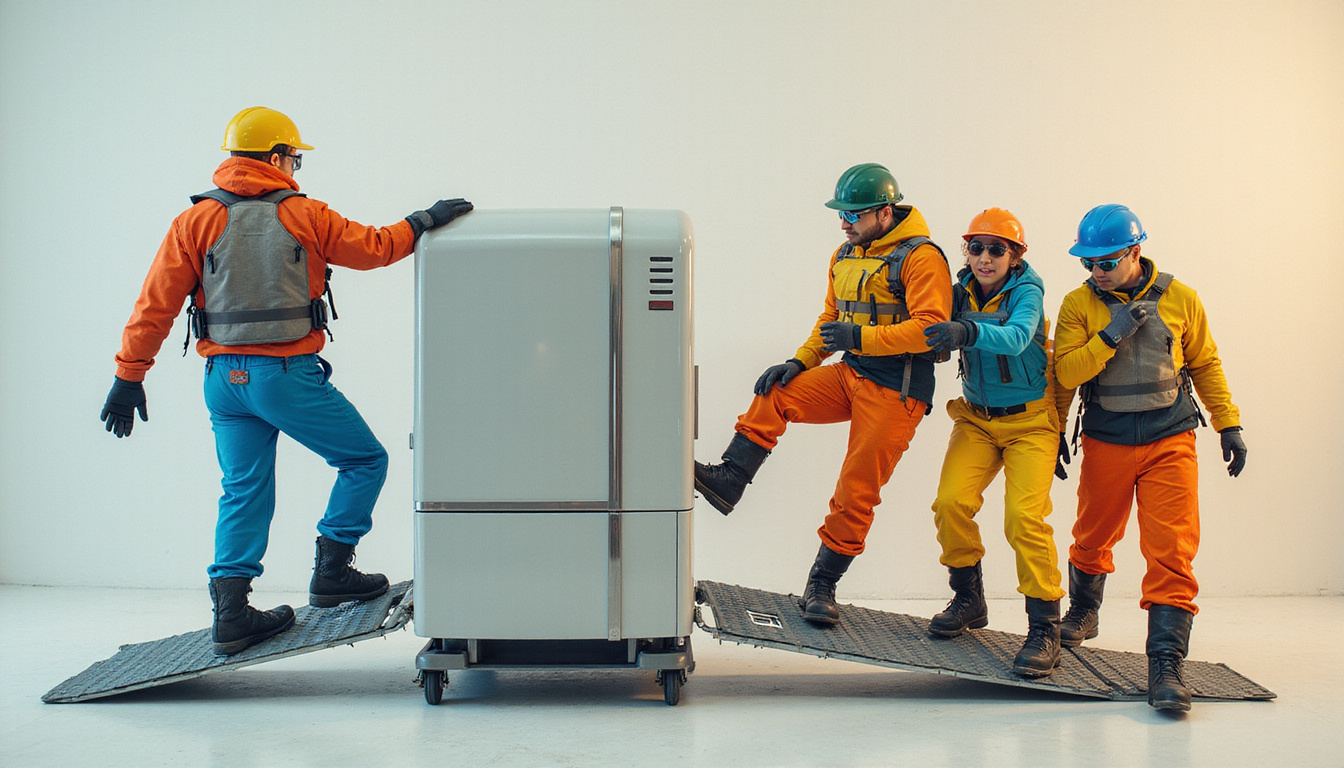
Step 5: Use smart movement strategies in tight spaces
Hallways, stairs, and doorways are where heavy item removal typically goes sideways. Pros use predictable patterns to stay in control.
Navigating doorways and corners
- Angle the item: Tilt tall items slightly to “hook” one corner through the doorway first.
- Stand items on end (when safe): A couch carried on its end can often pivot through tight doors more easily.
- Use the “high-low” method: One person holds the top higher while the other keeps the bottom lower, especially on stairs or sloped entryways.
Moving up and down stairs
- Keep the heavier, stronger person at the lower end whenever possible.
- Use appliance dollies with stair climber wheels for large, rigid items.
- Take one step at a time, pausing frequently to adjust grip and catch your breath.
- Communicate every movement: “Step… step… stop.”
Never rush stairs. This is where loss of control can cause the most severe injuries and damage.
Step 6: Protect your body like a professional
Your body is the most important tool in any heavy item removal project. Treat it that way.
Wear the right gear
- Closed-toe shoes with good traction, ideally work boots or sneakers with grippy soles
- Work gloves for grip and protection from sharp edges
- A back brace if you’re prone to lower-back issues (as a supplement, not a substitute for good form)
- Comfortable, non-baggy clothing that won’t catch on corners or tools
Work within limits
- Don’t attempt to lift more than you can reasonably control. If it feels unsafe, it is unsafe.
- Take short breaks between major lifts to avoid fatigue, which leads to sloppy form.
- Hydrate and fuel—moving is physical labor.
Knowing when to stop or call in help is a mark of good judgment, not weakness.
Step 7: When to hire a professional heavy item removal service
Some objects are beyond DIY territory, either because of their weight, shape, or the environment.
Consider professionals if you’re dealing with:
- Pianos, organs, or large safes
- Hot tubs, pool tables, or commercial equipment
- Tight staircases, spiral stairs, or multi-story moves
- Very heavy items in basements or attics
- Situations with tight timeframes or limited helpers
Professional heavy item removal crews come with:
- Specialized equipment and padding
- Insurance against damage and injury
- Experience handling “impossible” angles and layouts
- Trained teams who move in sync
In many cases, the cost is small compared to the potential expense of medical bills, damaged property, or broken specialty items.
Step 8: Disposal and eco-friendly heavy item removal
If you’re not just moving a heavy item, but getting rid of it, disposal matters.
Responsible disposal options
- Donate usable furniture and appliances to local charities, shelters, or reuse centers.
- Recycle metal items like exercise equipment, grills, and some appliances through scrap yards or municipal programs.
- E-waste centers for large electronics like TVs and old computer equipment.
- City bulk pickup days or special collection services for oversized items.
When hiring heavy item removal or junk hauling pros, ask how they handle disposal. Many prioritize donation and recycling, which keeps usable items out of landfills.
Quick heavy item removal checklist
Use this as a rapid reference before your next move:
- Measure the item and all doorways, halls, and stairs along the route.
- Clear the path of clutter, rugs, and cords.
- Disassemble what you can and empty the item.
- Protect floors, walls, and corners with blankets and cardboard.
- Put on appropriate clothing, gloves, and sturdy shoes.
- Use sliders, dollies, and straps instead of raw lifting when possible.
- Lift with proper form: close to body, bent knees, straight back, no twisting.
- Communicate clearly with helpers; move slowly and deliberately.
- Take breaks to avoid fatigue and poor decision-making.
- Call a professional heavy item removal service for extremely heavy, awkward, or high-risk moves.
FAQ: Common questions about heavy item removal
How do I prepare for heavy furniture removal in a small home?
In compact spaces, preparation is everything. Measure each doorway and hallway, then compare those measurements to your furniture’s dimensions. Remove doors from hinges if you need an extra inch or two. Disassemble what you can—take off couch legs, remove table tops, empty cabinets and drawers. Use furniture sliders to reposition pieces before attempting to move them out, and create a straight, obstacle-free path to the exit.
What’s the safest way to handle heavy appliance removal?
For heavy appliance removal, start by unplugging and disconnecting all water or gas lines according to the manufacturer’s instructions. Empty the appliance completely and secure any loose parts. Use an appliance dolly with straps and at least one helper. Tilt the appliance just enough to slide the dolly underneath, then strap it tightly. Keep the appliance upright (important for fridges and freezers), move slowly, and protect floors with cardboard or moving blankets.
When should I avoid DIY and call heavy lifting removal professionals?
Avoid DIY if the item is extremely heavy (like a safe, piano, or hot tub), located in a difficult space (tight stairs, attic, basement), or if you or your helpers have any existing back, knee, or shoulder issues. Also call pros if the replacement cost of the item—or potential damage to your property—would be significantly higher than the cost of professional heavy item removal. When in doubt, a quick phone consultation can clarify your options.
Make your next heavy move the easiest one yet
You don’t need a truckload of brute strength to handle heavy item removal—you need planning, the right tools, safe techniques, and the wisdom to know when to call in experts.
Before your next big move, walk your route, break items down, gear up with sliders or a dolly, and move deliberately. If the project feels too big, too risky, or too time-sensitive, reach out to a professional heavy item removal service. You’ll save time, protect your home, and, most importantly, safeguard your health.
Start planning your move today—list the heavy items you need to relocate, decide which you’ll handle yourself, and contact a trusted removal pro for anything beyond your comfort zone. Your back, your home, and your schedule will all benefit from a smarter, safer approach.
Junk Guys Inland Empire
Phone: 909-253-0968
Website: www.junkguysie.com
Email: junkguysie@gmail.com