
If you’re staring at an old swing set, torn canopy, or rusted slide and wondering where to start, you’re not alone. Playset removal can feel intimidating—there’s size, safety, and disposal to think about. The good news: with a clear plan and a few smart strategies, you can reclaim your yard without stress, injuries, or surprise costs.
This guide walks you step-by-step through assessing your old playset, choosing between DIY and professional help, and getting it out of your yard safely and legally.
Step 1: Decide if your playset should be removed or repaired
Before you grab any tools, decide whether the structure needs full removal or just a partial teardown and refresh.
Inspect the structure carefully:
- Wood playsets: Check for rot, splintering, soft spots, mold, and termite damage. Probe posts at ground level with a screwdriver.
- Metal playsets: Look for rust, sharp edges, loose welds, and unstable joints.
- Plastic components: Check for UV damage, cracking, and brittleness.
If you notice any of these, full playset removal is usually the safest choice:
- Posts wobble or shift under pressure
- Major rust where metal meets the ground
- Large cracks in key support beams
- Hardware so corroded it can’t be tightened
When in doubt, assume safety first. A compromised playset is a liability, especially with children or pets in the yard.
Step 2: Plan your playset removal strategy
A little planning upfront will save time and frustration later.
Measure and map your space
- Measure the footprint of the playset and its tallest point.
- Identify access paths: Can sections fit through gates? Do you need to disassemble into smaller pieces?
- Note nearby hazards: fences, windows, overhead wires, air conditioning units, or gardens.
Decide: DIY vs professional removal
Ask yourself:
-
Do I have the time and tools?
Basic hand tools may be enough for smaller sets. Large wooden fort-style structures often need a full tool kit and several hours. -
Is the structure stable enough to work on?
If it’s leaning, heavily rotted, or warped, moving or cutting it yourself can be dangerous. -
How will I dispose of everything?
Your city may have rules about large bulk items, metal recycling, and treated lumber (source: EPA guidance on treated wood disposal).
If any of these feel overwhelming, hiring a playset removal service or junk removal company is often worth the cost—especially if you value your time or have safety concerns.
Step 3: Gather the right tools and safety gear
Whether you’re partially dismantling or doing a full teardown, having the right tools makes everything smoother.
Common tools for playset removal:
- Socket set and wrenches
- Screwdrivers (Phillips and flathead)
- Adjustable wrench
- Hammer and pry bar
- Cordless drill/driver with driver bits
- Reciprocating saw or circular saw (for cutting wood beams)
- Utility knife (for ropes and nets)
- Ladder or step stool
Safety gear:
- Work gloves (to protect from splinters and sharp metal)
- Safety glasses
- Sturdy, closed-toe shoes or boots
- Dust mask if cutting or sanding old wood
- Hard hat if the structure is tall and unstable (recommended for big sets)
Don’t skip safety gear. Old wood and metal hardware can be unforgiving, and one loose board is enough to cause injury.
Step 4: Disassembly order – how to take apart a playset safely
Tearing into the main beams first is a recipe for collapse. Instead, follow a methodical top-down, outside-in approach.
1. Clear the area
- Remove toys, furniture, and yard items within a wide radius.
- Keep kids and pets well away from the work zone.
- Lay out a tarp to collect hardware and small pieces.
2. Remove loose and accessory items
Start with anything non-structural:
- Swings and chains
- Slides
- Ropes, ladders, and cargo nets
- Monkey bars attachments
- Roof tarps and canopies
- Plastic panels, steering wheels, telescopes, etc.
This immediately reduces weight and eliminates swinging or hanging hazards while you work.
3. Take down top structures
Next, carefully remove:
- Roof structures (wood or plastic)
- Upper railings and guard boards
- Monkey bar frames
Work from a stable ladder or platform and keep your center of gravity low. Have a second person steady the ladder and support long boards as you remove them.
4. Dismantle the main frame
Once the top components are gone:
- Remove cross-beams and braces one at a time, supporting them as you loosen bolts.
- Label reusable lumber or components if you might repurpose them.
- For stubborn bolts, use penetrating oil and give it time to work before forcing hardware.
5. Address posts and ground anchors
Finally, deal with the vertical posts:
-
If posts are set in concrete, you can:
- Dig around and remove the concrete footers, or
- Cut the posts off at or slightly below ground level, then cover with soil (often acceptable for personal yards, but check local codes if you plan construction in that spot).
-
If posts are simply buried:
- Dig out and rock them loose until they can be lifted.
At each stage, keep the work area tidy. Stack boards in one area, pile metal in another, and keep hardware in a container so nobody steps on nails or screws.
Step 5: Disposal options for old playsets
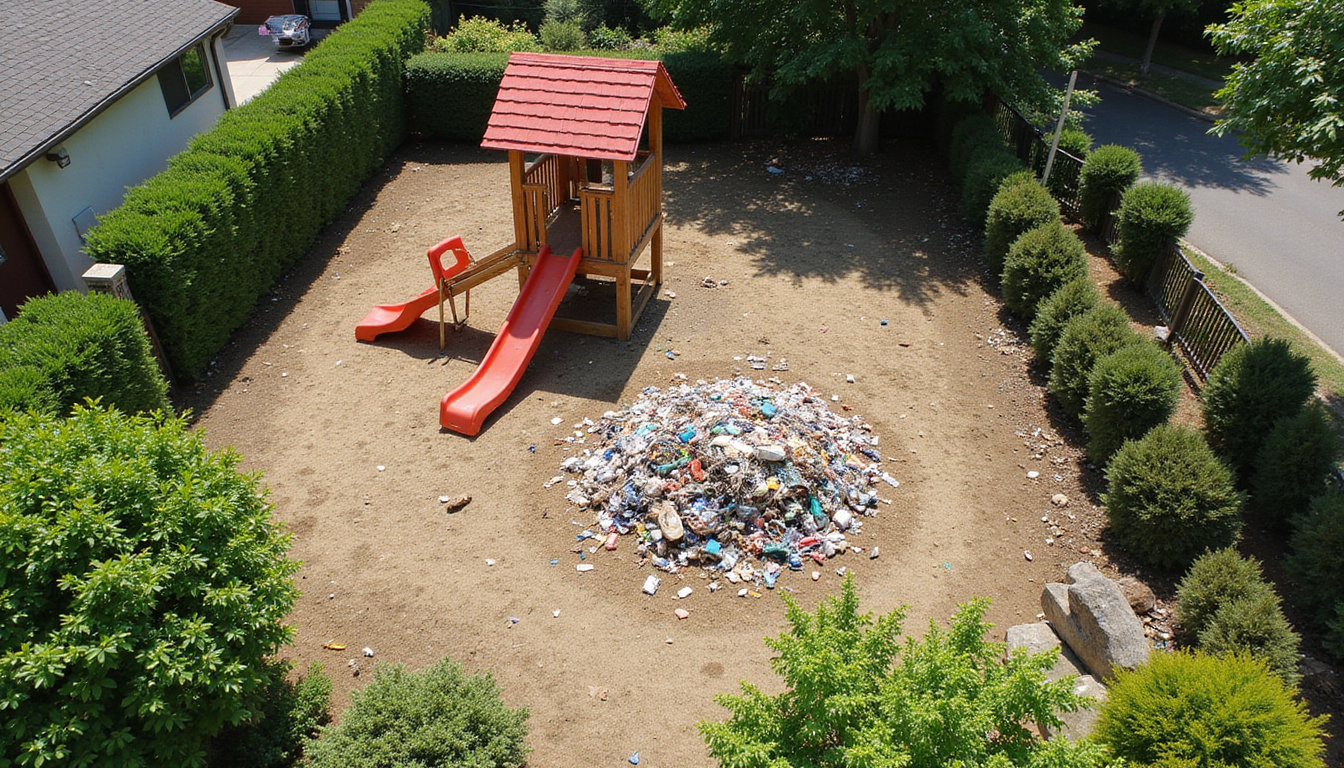
After playset removal, you’re left with wood, metal, plastic, and hardware. Dumping everything by the curb may not be allowed, and it’s often wasteful.
Separate materials
Sort into:
- Metal: chains, brackets, bolts, screws, metal rungs
- Wood: beams, decking, posts (note: often pressure-treated)
- Plastic: slides, panels, swings, small toys
- Textiles: canopies, rope, netting
Consider these disposal/reuse options
-
Municipal bulk pickup
- Many cities offer scheduled bulk collection.
- Call ahead to confirm size limits and rules for treated wood and metals.
-
Local recycling centers
- Scrap metal is almost always recyclable (and sometimes pays a bit).
- Some facilities accept rigid plastic playground parts.
-
Pressure-treated wood disposal
- Older sets may contain chemicals like CCA (chromated copper arsenate).
- Burning treated wood is not safe; it should go to an approved landfill or facility (source: EPA treated wood disposal guidance).
-
Donation or reuse
- If parts are still safe and in good condition, consider:
- Donating to neighbors, schools, or community centers.
- Listing for free pickup online.
- Repurposing wood into raised garden beds, benches, or compost bin frames (avoid using very old treated wood for food beds).
- If parts are still safe and in good condition, consider:
-
Junk removal services
- Ideal if you want a no-hassle option.
- Many junk haulers offer full-service playset removal, including teardown, hauling, and disposal in one visit.
Step 6: When to hire a professional playset removal service
DIY is not always the best route. Professional help is wise when:
- The playset is very large, multi-level, or custom-built.
- There is major rot, leaning, or structural instability.
- It’s installed near a fence, pool, deck, or other structures.
- You lack the time, tools, or physical ability for heavy lifting.
- You’re not sure how or where to dispose of everything.
Benefits of hiring a pro:
- Speed: Most removals are completed in a few hours.
- Safety: Teams are trained to handle unstable structures.
- Insurance: Reputable companies are insured in case of damage or injury.
- All-in-one service: Many handle disassembly, cleanup, and responsible disposal.
When comparing companies, ask:
- Is teardown included, or is it just hauling?
- Are disposal and dump fees included in the quote?
- Do they recycle metal and plastics where possible?
- Are they licensed and insured?
A clear estimate with these details documented protects you from surprise charges.
Step 7: Preparing your yard for what comes next
Once the playset is gone, your yard will feel surprisingly open—and maybe a bit bare. Use this moment to prep the area for its next chapter.
Clean up and restore the ground:
- Remove any remaining stakes, concrete, or buried hardware.
- Rake out mulch, gravel, or rubber chips; consider sifting for hidden nails or screws.
- Fill post holes with clean soil and tamp it down.
- Add topsoil and grass seed if you want the lawn to reclaim the space.
Plan for your new use of the space:
Some popular transformations after playset removal include:
- A quiet seating or fire pit area
- A raised bed vegetable garden
- A small patio or deck extension
- An open lawn for sports or pets
- A low-maintenance landscape bed with shrubs and perennials
Think about long-term needs: kids growing up, home resale, and how much maintenance you want.
Quick checklist for smooth playset removal
Use this list to keep your project on track:
- Inspect structure for safety and decide on DIY vs pro.
- Measure the playset and identify access routes.
- Confirm local rules for bulk pickup and treated wood disposal.
- Gather tools and safety gear.
- Clear the area and remove all loose items.
- Take down accessories, then roofs and upper structures.
- Disassemble the main frame and finally remove posts.
- Sort materials for recycling, landfill, or reuse.
- Restore the ground and plan the new layout for your space.
FAQ: Common questions about playset removal
1. How much does playset removal typically cost?
Costs vary widely, but professional playset removal usually ranges from about $150 to $600 depending on size, complexity, and access. Larger, multi-level wooden sets with concrete footings or difficult yard access often fall on the higher end. DIY can be cheaper but factor in disposal fees and your time.
2. Can I get rid of a swing set without hiring a playset removal company?
Yes. Many homeowners handle swing set removal themselves, especially for smaller or simpler structures. If it’s stable, you have basic tools, and your city accepts large items, a careful top-down disassembly is very doable. If the structure is rotted, leaning, or near obstacles, a professional is safer.
3. What should I do with old wood and metal from my playset teardown?
After old playset removal, separate wood, metal, and plastic. Take metal to a scrap or recycling center, confirm disposal rules for treated lumber with your local waste authority, and recycle plastics where possible. If parts are still safe, consider donating or giving them away for reuse.
Reclaiming your yard from an aging play structure doesn’t have to be stressful. With a clear plan, proper safety measures, and a thoughtful approach to disposal, you can complete playset removal efficiently and turn that footprint into something your household actually uses and enjoys.
If you’re ready to clear out your old set but don’t want the hassle, consider scheduling a professional playset removal service. You’ll save time, avoid heavy lifting, and open up your outdoor space sooner—so you can start creating the next version of your yard right away.
Junk Guys Inland Empire
Phone: 909-253-0968
Website: www.junkguysie.com
Email: junkguysie@gmail.com