
If you’ve got an old fridge humming in the garage or a broken washer taking up space, appliance recycling pickup can turn that clutter into cash or at least free removal. Instead of dragging heavy appliances to the curb and hoping they disappear, there are smarter ways to get them picked up, recycled responsibly, and sometimes even earn a little money in the process.
This guide walks you through practical, people-tested hacks to declutter your home, protect the environment, and unlock every possible payout or rebate.
Why appliance recycling pickup beats the dump
Dumping old appliances at the landfill is the worst of all worlds: you pay fees, waste usable materials, and risk releasing hazardous substances like refrigerants. With a proper appliance recycling pickup:
- Usable metals and components get recovered and reused
- Dangerous chemicals (like Freon in fridges and ACs) are handled safely
- You save time and heavy lifting
- You may qualify for cash, rebates, or utility bill credits
According to the U.S. Environmental Protection Agency, recycling metals and appliances saves significant energy and reduces greenhouse gas emissions compared with producing metals from raw materials (source: EPA). So it’s not just convenient—you’re doing something tangibly good.
Step 1: Know what qualifies as an “appliance” for pickup
Most appliance recycling pickup programs focus on large, bulky items, but the details vary by provider. Commonly accepted items include:
- Refrigerators and freezers
- Washers and dryers
- Dishwashers
- Ovens, stoves, cooktops, and ranges
- Microwaves (sometimes)
- Window or portable air conditioners
- Dehumidifiers
- Water heaters
- Some larger electronics (depends on the service)
Before you book, check each program’s list of accepted items and any restrictions. Some may only take working units; others specialize in non-working or scrap appliances.
Step 2: Start with utility and government rebate programs
One of the easiest ways to get paid for appliance recycling pickup is through your electric or gas utility. Many utilities offer:
- Rebates for old, working fridges or freezers
- Free pickup of energy-hogging appliances
- Bill credits or prepaid gift cards
These programs aim to get inefficient appliances off the grid, so they usually require:
- The appliance to be in working condition
- A minimum size (often 10–20 cubic feet for fridges/freezers)
- The appliance to be located at a service address in their territory
How to find these programs fast
- Go to your utility’s website and search for “appliance recycling” or “refrigerator recycling.”
- Check your state or city government website for “appliance recycling” or “bulky item pickup.”
- Call customer service and ask directly: “Do you offer refrigerator or appliance recycling pickup with rebates or free haul-away?”
You might uncover:
- $25–$75 for a working fridge or freezer
- Free haul-away of window ACs or dehumidifiers during special events
- Seasonal energy-efficiency promotions that stack with store rebates
Step 3: Use retailer haul-away to your advantage
If you’re buying a new appliance, retailers can turn a hassle into free appliance recycling pickup.
Big-box and appliance store options
Many retailers offer:
- Free haul-away with delivery and installation of a new appliance
- Discounted haul-away if you’re buying multiple items
- Recycling guarantees that your old unit won’t be resold unsafely
When you shop:
- Ask: “Do you provide appliance recycling pickup of my old unit? Is there a fee?”
- Clarify whether they recycle, donate, or just dump the old appliance
- Compare offers between retailers—haul-away can be a negotiation point
How to stack this with rebates
- Check if your utility offers a separate rebate for recycling your old appliance.
- Ask the retailer if they’ll complete or provide needed documentation.
- Some promotions allow you to get both free pickup and a utility rebate, which is essentially getting paid to declutter.
Step 4: Monetize scrap value through metal recyclers
If your appliance is dead and there are no rebates available, scrap yards and metal recyclers can still turn it into cash.
What you can earn
- Payment is usually based on weight and metal type (steel, copper, aluminum).
- A full-sized fridge or washer may net a small but real amount—think modest cash, not a windfall.
- Copper-heavy items (like some AC units) may bring in more.
How to do it efficiently
-
Search for “scrap metal recycling near me” or “appliance recycling center.”
-
Call ahead and ask:
- “Do you accept whole appliances?”
- “Do I need to remove refrigerant first for fridges/ACs?”
- “What do you pay per pound for mixed appliances?”
-
If you don’t have a truck, look for:
- Independent haulers who offer free appliance pickup for scrap
- Apps or classifieds where scrappers advertise “free appliance removal”
These scrappers often make their profit from the metal value, so you get free removal in exchange.
Step 5: List working appliances for local sale or donation
If your appliance still works, you might earn more money than any structured appliance recycling pickup program can offer.
Selling locally
Use local marketplaces:
- Facebook Marketplace
- Craigslist
- Nextdoor
- Community bulletin boards
Tips:
- Take clear photos and include brand, age, model, and measurements.
- Mention any issues honestly: “Works, but noisy spin cycle,” etc.
- Offer curbside pickup only for safety and convenience.
- Price reasonably; buyers factor in the hassle of transporting heavy items.
Sometimes you can get more value by:
- Selling parts (shelves, doors, motors) separately for popular brands.
- Offering a “bundle” discount for sets (washer + dryer).
Donating to nonprofits
Many charities and thrift stores accept working appliances and may offer:
- Free pickup for large items
- A tax-deductible donation receipt
Check with:
- Habitat for Humanity ReStore
- Local thrift or charity shops
- Community reuse centers
Ask: “Do you offer appliance recycling pickup for donations, and what condition do you require?”
Step 6: Use independent haulers and “junk” services strategically
If convenience is your top priority, independent junk removal and hauling services can handle everything—from stairs to loading to disposal.
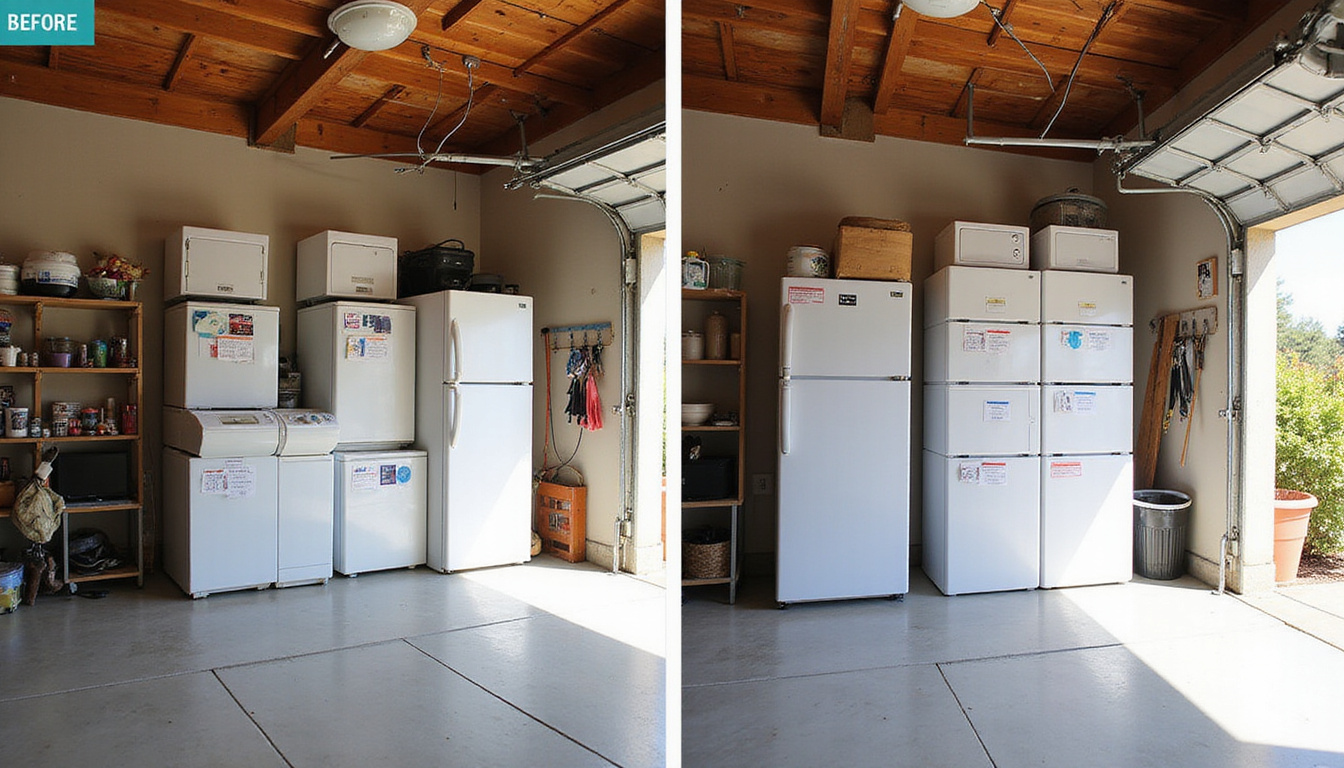
When this makes sense
- You have multiple heavy appliances and other bulky junk
- No rebates or free programs are available in your area
- You want it all gone in a single appointment
Compare:
- Local independent haulers (often cheaper, flexible on pricing)
- National junk removal chains (more structured, higher base price)
Questions to ask:
- “Do you recycle or scrap appliances, or just landfill them?”
- “Can I get a discount if the appliances are all near the curb or garage?”
- “Do you charge per item or total volume?”
Sometimes you can negotiate a lower fee if you:
- Move everything to an accessible location
- Schedule during off-peak times
- Combine your pickup with a neighbor’s junk to share costs
Step 7: Prepare your appliance for safe, quick pickup
To make appliance recycling pickup smooth, safe, and possibly cheaper, prepare each unit ahead of time.
Basic prep checklist:
- Unplug the appliance at least 24 hours before pickup
- For fridges/freezers:
- Empty food and clean interior
- Defrost and dry to prevent mold and drips
- Remove shelves and drawers (or secure them with tape)
- Disconnect water lines for washers, fridges with ice makers, and dishwashers
- Tape down cords and doors so they don’t swing open
- Clear a clear path from the appliance to the exit
Some programs require appliances to be:
- Located on the ground floor or easily accessible
- Free of excessive dirt, pests, or mold
- Standing upright (especially for fridges and freezers)
Doing this prep can help avoid extra fees—and it’s simply safer for everyone handling the item.
Hacks to maximize what you earn from appliance recycling pickup
To squeeze the most value out of the process, combine the approaches above thoughtfully.
Try these money-saving and money-making hacks:
-
Stack incentives
- Use a retailer’s free haul-away plus a utility rebate when possible.
- Ask if your local government offers recycling vouchers or event days.
-
Time your pickup
- Watch for seasonal energy-efficiency promotions (spring and early summer are common for fridge/AC offers).
- Some cities have free bulk pickup weeks where appliances are accepted at no extra cost.
-
Leverage multiple channels
- Sell working units locally.
- Use scrap yards or independent haulers for non-working gear.
- Donate borderline items that still function but may not sell quickly.
-
Bundle items
- If hiring a junk service, bundle old furniture, electronics, and appliances into one trip to lower the cost per item.
-
Ask for proof of recycling
- Some programs provide documentation that units were properly recycled or decommissioned.
- This matters if you’re environmentally conscious or need proof for a green business initiative.
Common pitfalls to avoid
Even with the best appliance recycling pickup intentions, a few mistakes can cost you money or create hassles.
Avoid:
- Waiting until the last minute
- Utility and rebate programs sometimes run out of funding mid-year.
- Ignoring condition requirements
- Submitting a non-working fridge to a “working-only” rebate program leads to rejection.
- Letting unqualified people remove refrigerant
- Fridges, freezers, and ACs contain chemicals that legally require proper handling.
- Blocking in the appliance
- Clear hallways and driveways before the pickup crew arrives, or risk rescheduling fees.
FAQ about appliance recycling pickup
1. How do I find free appliance pickup and recycling near me?
Search for “free appliance recycling pickup + your city” and check:
- Your electric or gas utility’s appliance recycling program
- City or county bulky item collection services
- Habitat for Humanity ReStore or similar nonprofits
Call each provider and ask directly if pickup is free, discounted, or tied to a rebate.
2. Can I get paid for old appliances that don’t work anymore?
Yes, but usually not through standard rebate programs. Instead:
- Take them to a scrap metal recycler that pays for appliances by weight
- Use independent scrappers who offer free removal and may pay a small amount
- Sell parts from popular brands if you’re willing to do some disassembly
The payout is modest, but it beats paying to dump them.
3. What’s the most profitable way to get rid of a used appliance?
For the best return:
- Sell it locally if it’s in good working condition and relatively modern.
- Use utility rebates or retailer programs for older, working, inefficient models.
- Turn non-working units into cash through scrap metal recycling or free pickup scrappers.
Mix these strategies for different items to maximize cash and convenience from appliance pickup and recycling.
Clearing out old appliances doesn’t have to mean heavy lifting, landfill guilt, or wasted money. With a smart plan, you can line up convenient appliance recycling pickup, protect the environment, and even get paid in cash, credits, or tax deductions.
Start today by making a quick list of the appliances you want gone, then check your local utility, city, and nearby buyers or recyclers. Book your first pickup, free or paid, and turn that dusty corner of your garage or basement into usable space again—while squeezing every bit of value out of your old machines.
Junk Guys Inland Empire
Phone: 909-253-0968
Website: www.junkguysie.com
Email: junkguysie@gmail.com