
Moving a fridge, washer, or oven is very different from moving boxes of clothes. Appliance relocation involves heavy, awkward, and often delicate machines connected to water, gas, and electricity. Done wrong, it can damage the appliance, your floors, or you. Done right, it’s safe, efficient, and far less stressful.
This guide walks you step by step through how to prepare, protect, and move large household appliances with confidence—whether you’re shifting them across the room or transporting them to a new home.
Why Appliance Relocation Is Risky (and How to Lower the Risk)
Large appliances are:
- Heavy and unbalanced (easy to tip or drop)
- Connected to utilities (gas, water, electric)
- Expensive to replace or repair
- Often on delicate flooring
Moving them incorrectly can cause:
- Back and joint injuries
- Crushed fingers and toes
- Water or gas leaks
- Damaged floors, walls, and door frames
- Internal damage to the appliance itself
Understanding these risks is the first step. The second is using smart planning, proper tools, and correct technique—exactly what this appliance relocation guide is about.
Step 1: Plan Your Path Before You Touch Anything
Appliance relocation should start with planning, not lifting.
Measure everything
- Measure the appliance (height, width, depth).
- Measure doorways, hallways, and stairways along the path.
- Check elevator dimensions if you’re in a building.
If any doorway is narrower than the appliance, plan to remove doors (sometimes both the appliance doors and the room doors) to gain an extra inch or two.
Clear the route
- Remove rugs, small furniture, and clutter.
- Secure or cover loose cords and cables.
- Prop doors open so you don’t have to juggle doorknobs mid-move.
A clear, straight path reduces the chance of tripping or scraping walls during appliance relocation.
Step 2: Gather Proper Appliance Moving Equipment
Using the right tools is the biggest difference between a safe move and a dangerous one.
Consider having:
- Appliance dolly (with straps) – Designed to handle heavy loads and keep them stable.
- Furniture sliders – To glide appliances over floors without scratching.
- Moving straps / lifting straps – Shift some weight to your legs and core.
- Protective blankets or moving pads – Cushion appliances and protect walls/door frames.
- Cardboard sheets or plywood – Create a temporary “runway” over delicate flooring.
- Work gloves – For grip and protection.
- Painter’s tape – To secure cords and doors without leaving residue.
- Wrench, screwdriver, pliers – For disconnecting hoses, brackets, or handles.
If you don’t own these, most local hardware stores or moving companies rent them at low cost—well worth it for safer appliance relocation.
Step 3: Disconnect Utilities Safely
Every large appliance must be fully disconnected from power, water, or gas before you move it.
Electric power
- Turn off and unplug the appliance.
- If the plug is hard to reach, switch off the appropriate breaker, then safely access the outlet.
Water
For washers, ice-maker fridges, or dishwashers:
- Locate the water shutoff valve (behind the appliance, under the sink, or near the main line).
- Turn the valve clockwise to close it.
- Run the appliance briefly (if relevant) to relieve pressure.
- Disconnect hoses and drain them into a bucket or towel.
Gas
Gas stoves and some dryers require special care:
- Turn off the gas valve (lever perpendicular to the pipe = OFF).
- If you smell gas, stop immediately and call your utility provider.
- Many safety authorities recommend having a licensed technician disconnect and reconnect gas lines (source: U.S. Consumer Product Safety Commission for gas safety guidance).
Never force a connection or attempt DIY repairs if something looks wrong. When in doubt, hire a pro for gas and water line steps in your appliance relocation plan.
Step 4: Prepare Each Appliance Type the Right Way
Different appliances need slightly different prep. Here’s how to handle each one.
How to move a refrigerator safely
-
Empty it completely
Use up, donate, or cool-store food. Remove all shelves, drawers, and door bins or secure them with tape. -
Defrost and dry
- Unplug at least 24 hours before moving.
- Prop doors open to prevent mildew.
- Place towels to catch melting ice.
- Wipe interior dry once defrosted.
-
Secure doors and cords
- Tape the power cord to the back.
- Wrap the fridge in moving blankets.
- Gently tape doors shut (without covering vents).
-
Keep it upright
Compressor oil can flow into refrigerant lines if laid flat. Move the fridge standing whenever possible. If it must lie down, follow the manufacturer’s direction, and let it sit upright 4–24 hours before turning it on again.
How to move a washing machine
- Run a cleaning cycle to clear detergent residue.
- Turn off water and disconnect hoses.
- Drain all water
- Use the drain hose and a shallow pan or towels.
- Check filters and the pump drain if accessible.
- Use transit bolts (shipping bolts)
These lock the drum to prevent internal damage. If you don’t have them, contact the manufacturer or a local parts supplier; they’re highly recommended for safe washer relocation. - Secure the lid/door and cord with tape and wrap the unit in blankets.
How to move a dryer
-
Electric dryer
- Unplug from the wall.
- Disconnect the vent hose and clean out lint while you’re there.
-
Gas dryer
- Shut off the gas valve.
- Have a qualified technician disconnect/reconnect the gas line if you’re not experienced.
Secure the drum (if recommended by the manufacturer), tape the door closed, and wrap the appliance.
How to move a range or oven
-
Electric range
- Unplug or switch off the breaker.
- Remove racks and burners if detachable.
-
Gas range
- Turn off the gas valve.
- Have a pro handle disconnection and reconnection.
-
Protect the glass
- Remove or heavily pad glass lids and oven doors.
- Wrap with moving blankets and tape them securely.
Step 5: Protect Floors, Walls, and Door Frames
Appliance relocation can do serious damage to your home if you rush.
Safeguard floors
- Place furniture sliders or a cardboard/plywood path under the appliance.
- Avoid dragging heavy machines directly on hardwood, vinyl, or tile.
- Use a dolly whenever possible to keep weight focused on wheels and not on the floor.
Shield walls and corners
- Tape moving blankets over sharp corners and tight turns.
- Wrap the appliance tightly so handles and edges can’t gouge walls.
A few minutes spent on protection can save you from repairs and security-deposit battles later.
Step 6: Lift and Move With Proper Technique
The heaviest part of appliance relocation is often the physical move itself. Use your tools correctly and your body wisely.
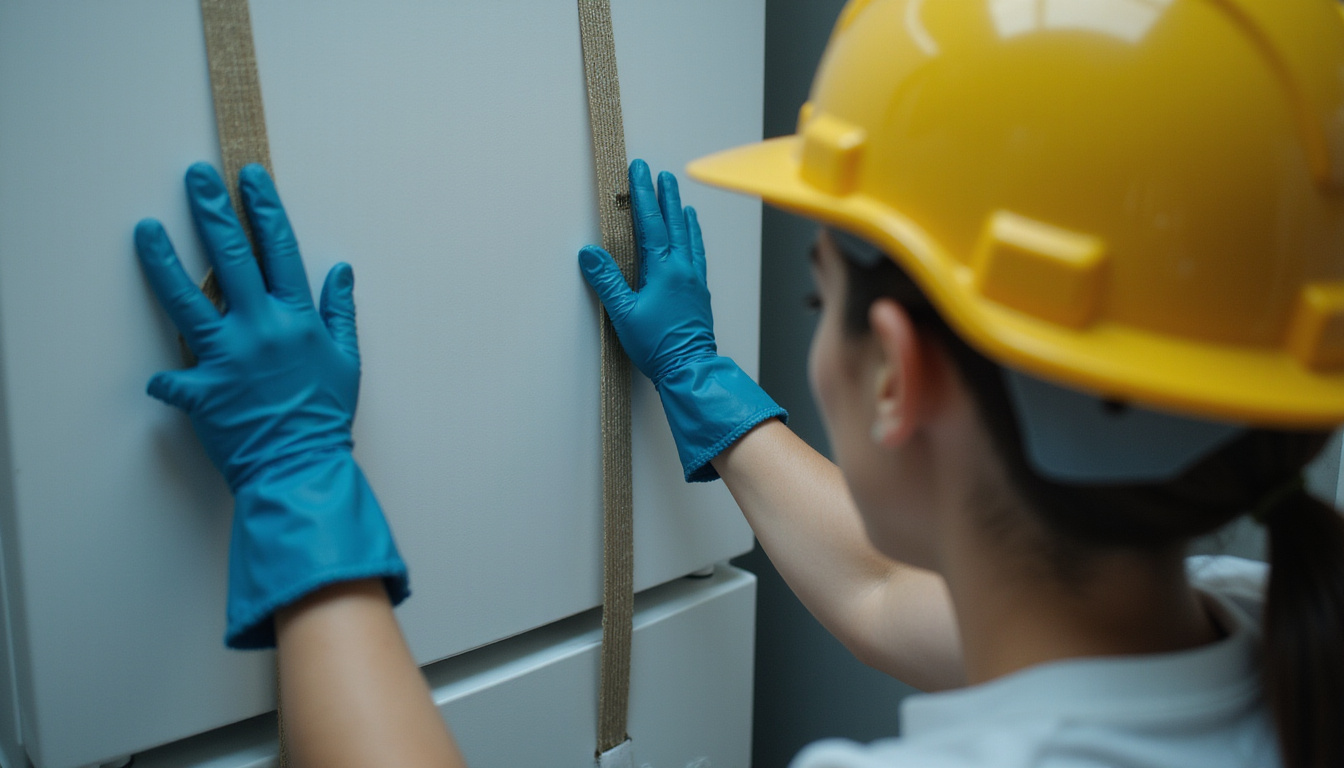
Safe lifting basics
- Never lift a full-size appliance alone.
- Keep your back straight and bend at the knees.
- Lift with your legs, not your back.
- Keep the load close to your body.
- Move slowly and communicate clearly with your partner.
Using a dolly correctly
- Tilt the appliance slightly and slide the dolly’s base plate underneath.
- Center the load on the dolly, then use straps to secure it tightly.
- Tilt the dolly back slowly until the weight is balanced over the wheels.
- Push rather than pull whenever you can—pushing gives more control.
- On stairs, have one person above and one below, moving one step at a time and talking constantly.
When to call professionals
Hire a professional appliance relocation service if:
- The appliance is extremely heavy or high-end (e.g., large Sub-Zero fridge).
- You must navigate tight staircases or multiple floors.
- Gas or water connections are complex.
- You have health or mobility concerns.
Pros bring specialized gear, experience, and insurance—often cheaper than the cost of a serious mistake.
Step 7: Loading, Transporting, and Unloading Appliances
If you’re using a truck or van, load large appliances first.
- Position against the walls of the truck to minimize shifting.
- Stand them upright whenever possible, especially fridges and freezers.
- Strap them securely to anchor points.
- Pad between appliances so metal doesn’t rub against metal.
During unloading, reverse your steps:
- Clear and protect the path in the new space.
- Use the dolly and sliders again.
- Move slowly through doorways and tight spaces.
Once everything is in its new location, leave fridges upright for the recommended time before plugging in, and reconnect water/gas lines according to manufacturer instructions or with help from a technician.
Quick Checklist for Safe Appliance Relocation
Use this list as a final walk-through before you move any heavy appliance:
- Measured appliance and all doorways/pathways
- Cleared and protected the route (floors, walls, corners)
- Gathered tools: dolly, sliders, straps, blankets, basic tools
- Disconnected power, water, and/or gas safely
- Emptied interior contents and secured shelves/drawers
- Drained any remaining water (washers, fridges, dishwashers)
- Secured cords and doors with tape
- Wrapped appliance with moving blankets
- Used proper lifting technique and communication with helpers
- Loaded upright and strapped securely for transport
If you can tick each box, your appliance relocation is set up for success.
FAQ: Appliance Relocation Questions Answered
1. How much does professional appliance relocation typically cost?
Costs vary by region, number of appliances, and difficulty of the move, but local appliance moving services often charge either a flat per-item fee or an hourly rate. For a simple in-home move, you might pay less than a full moving job; for multi-story or long-distance relocation, expect higher fees. Get quotes from at least two companies and ask if utility reconnection is included.
2. Can I lay a refrigerator down during appliance transport?
It’s best to keep refrigerators upright during any appliance relocation to protect the compressor. If you absolutely must lay it down, follow the manufacturer’s instructions for which side is safest, handle it very gently, and let it stand upright at the destination for several hours (often 4–24) before turning it back on.
3. What equipment is essential for DIY heavy appliance moving?
For safe DIY appliance relocation, the essentials are: an appliance dolly with straps, furniture sliders, moving blankets, strong tape, basic hand tools, and a helper. Lifting straps and protective floor coverings (cardboard or plywood) are highly recommended as well, especially on stairs or delicate floors.
Relocating appliances doesn’t have to be a back-breaking, nerve-wracking ordeal. With the right preparation, tools, and safety steps, you can protect your home, your appliances, and yourself.
If you’re planning a move soon—whether it’s across the room or across town—start lining up the gear and help you’ll need today. And if any part of your appliance relocation feels risky or uncertain, reach out to a professional moving or appliance service. A brief call now can save you from expensive damage and injuries later.
Junk Guys Inland Empire
Phone: 909-253-0968
Website: www.junkguysie.com
Email: junkguysie@gmail.com