
If you’re preparing to sell your home or just want to stretch your budget further, appliance reuse is one of the smartest strategies you can use. Instead of rushing to replace every dated or dinged-up unit, the right reuse and refresh projects can dramatically improve both your everyday comfort and your property’s perceived value—often for a fraction of the cost of buying new.
Below, you’ll find practical, project-based ideas for reusing and upgrading existing appliances, how these projects can influence appraisal and buyer perception, and when it actually does make sense to replace instead of reuse.
Why appliance reuse matters for your bottom line
New appliances are expensive, and in many cases they don’t move the needle on value as much as sellers expect. Thoughtful appliance reuse often delivers a better return because:
- You avoid major cash outlay right before listing.
- You reduce disposal and installation costs.
- You keep functional appliances out of landfills.
- You still get the “updated home” look that buyers pay more for.
Real estate pros frequently stress that buyers make emotional decisions based on how “move‑in ready” a home feels. Appliances that look clean, modern, and well cared for support higher offers—even if they’re not the latest model year.
Step one: evaluate what’s worth reusing
Before diving into appliance reuse projects, assess each major appliance with three questions:
-
Is it safe and mechanically sound?
No leaks, no exposed wiring, no troubling noises or burning smells. If safety is in doubt, call a technician. -
How old is it?
- Fridges: typical lifespan 10–15 years
- Dishwashers: 8–12 years
- Washers/dryers: 10–13 years
- Ovens/ranges: 13–15 years
(Source: U.S. Department of Energy and major manufacturers’ guidance.)
-
How does it look to a first‑time visitor?
Scratches, yellowing plastic, missing knobs, and broken shelves all suggest neglect, which can drag down perceived value.
If an appliance is relatively young, functions well, and just looks tired, it’s a prime candidate for reuse and cosmetic upgrades.
High-impact appliance reuse projects in the kitchen
The kitchen is the heart of resale value. Buyers expect it to be clean, coherent, and reasonably updated. That doesn’t require a full gut renovation—thoughtful reuse can get you much of the way there.
1. Refresh the refrigerator, don’t replace it
A beat‑up fridge can dominate a buyer’s first impression. You can often transform it with:
-
Deep cleaning and deodorizing
- Remove all shelves and bins; wash with warm soapy water.
- Clean door gaskets with a toothbrush and mild detergent.
- Neutralize lingering odors with an open box of baking soda or a bowl of coffee grounds.
-
Cosmetic repairs
- Use touch‑up paint sticks matched to stainless, white, or black finishes.
- Address door dings with specialty stainless repair kits.
- Replace broken bins and shelves; many can be ordered directly from the manufacturer.
-
Door panel upgrade
Some models allow you to insert new front panels. Swapping in a stainless or black stainless panel can instantly modernize the look for far less than a replacement.
These changes can turn “old but gross” into “clean and perfectly good,” which is all many buyers need to see.
2. Transform a dated dishwasher
If your dishwasher works but looks tired:
- Swap the front panel on panel‑ready or older models to match cabinets or other appliances.
- Replace the handle with a modern bar pull that echoes your cabinet hardware.
- Clean the interior thoroughly:
- Clear the filter.
- Run a cycle with a dishwasher cleaner or white vinegar.
- Polish the stainless tub if applicable.
A sparkling, quiet dishwasher that matches the kitchen visually is nearly as appealing as a new one to most buyers.
3. Rehab the range and oven
Ranges are focal points in listing photos, so appliance reuse here can pay off.
-
Replace worn elements and hardware
- New burner grates and drip pans for coil or gas units.
- Fresh knobs and control dials.
- New oven light and clean glass door.
-
Add or replace a backsplash
Even if the range is older, a new, clean backsplash makes the whole area feel updated. -
Re‑season or clean grates and racks
Soak racks in a tub with hot water and degreaser, then scrub. For gas grates, remove and clean or re‑season lightly with oil for a uniform dark finish.
If your oven is electric and the glass top is scratched but intact, a thorough cleaning and consistent shine can shift perception from “old and abused” to “used but well cared for.”
Laundry room appliance reuse that impresses buyers
Laundry spaces are increasingly featured in photos and virtual tours. Modernized, reused appliances make the area feel like a bonus rather than an afterthought.
4. Stack or relocate for better layout
If your washer and dryer are front‑load and stacking‑compatible, a relatively low‑cost stacking kit can:
- Free floor space for a folding counter or storage.
- Make a small utility room feel more functional and updated.
- Turn a messy corner into a compact laundry “zone” buyers love.
This is a classic appliance reuse move: you keep your existing units but use them to enable a more marketable layout.
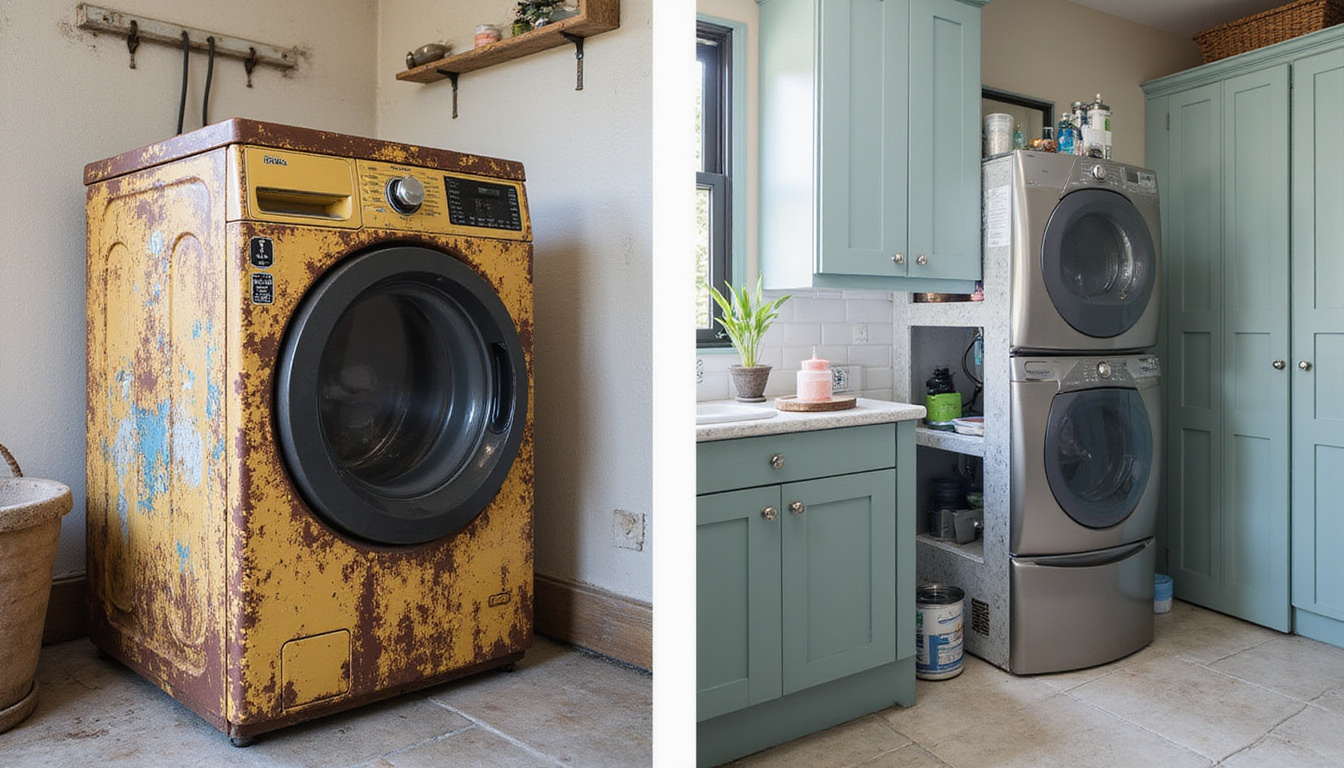
5. Cosmetic upgrades for washers and dryers
- Replace yellowed or cracked knobs and bezels.
- Use appliance paint on chipped white finishes (properly prepped and masked).
- Add simple storage above or beside the units: open shelving, a single cabinet, or a hanging rod. The appliances themselves don’t change, but the perceived utility of the space increases.
A clean, organized laundry area sends the message that the home has been maintained and is easy to live in.
Creative appliance reuse outside the kitchen and laundry
Not every older appliance must stay in its original role. Some can be repurposed in ways that both serve you now and appeal to certain buyers later.
6. Convert an old freezer into garage or pantry storage
If you’re upgrading your main freezer but the old one still works:
- Move it to the garage or basement as “overflow” storage.
- Add a simple chalkboard or dry‑erase panel on the lid or door for inventory lists.
- Organize with inexpensive crates or baskets to show buyers how much storage they’ll gain.
Many families specifically look for extra freezer capacity; advertising this as a feature can be a small but memorable value add.
7. Turn a retired fridge into a beverage station
A second refrigerator can become:
- A garage “beer and soda” fridge with simple shelf labels.
- A basement party station with countertop above for snacks.
Even if you don’t plan to take it with you, staging this use can signal “this house is great for entertaining,” which often nudges offers higher.
When to reuse vs. replace: resale-focused decision guide
Not every appliance should be reused. Here’s a quick framework grounded in resale thinking.
Reuse or refresh if:
- The unit is < 10 years old (for most appliances) and functions well.
- Repairs are minor and under ~20–30% of replacement cost.
- A cosmetic clean‑up will make it look close to “like new.”
- Your local market isn’t ultra‑luxury, and buyers prioritize cleanliness and reliability over brand prestige.
Consider replacing if:
- The unit is visibly near the end of its lifespan (e.g., 15‑year‑old fridge).
- Repairs are expensive or recurring.
- Efficiency is poor, and local buyers are energy‑conscious.
- Competing listings in your area all feature newer, stainless or high‑end appliances.
Energy‑efficient appliances can also affect perceived and actual costs of ownership. According to the U.S. Department of Energy, ENERGY STAR–certified refrigerators and dishwashers can save significant energy and water over their lifetimes (source: energy.gov). In some markets, buyers will pay more for a home that clearly advertises those savings.
Budgeting and planning your appliance reuse projects
To keep appliance reuse practical and profitable, create a simple project list and budget.
Example list for a three‑bedroom home:
- Deep‑clean all kitchen appliances – $50 for cleaners and supplies
- Replace fridge bins and door gasket – $120–$200
- Touch‑up paint for dishwasher and range – $30–$60
- New knobs/handles for range, washer, and dryer – $60–$120
- Stacking kit for washer/dryer – $50–$90 (if compatible)
- Simple shelving above laundry – $80–$150
Total: roughly $390–$670, far less than even a single mid‑range new appliance, yet potentially enough to shift buyer perception from “needs updating” to “nicely maintained.”
Simple staging tricks that maximize the impact of reuse
Even well‑refreshed appliances can look underwhelming if the environment around them is chaotic. To leverage your appliance reuse work fully:
- Keep counters and tops clear. No magnets, paper clutter, or random small appliances stacked on units for listing photos and showings.
- Use consistent finishes. If you have a mix of black and white appliances, consider inexpensive front‑panel changes or use decor to tie them together (e.g., black hardware and white cabinets).
- Show function in a subtle way. A neatly folded stack of towels in the laundry room, or a few clean glasses near a beverage fridge, hints at lifestyle without clutter.
These staging details help buyers see your reused appliances as part of a polished, move‑in‑ready home.
Environmental benefits that buyers increasingly notice
Sustainability is becoming more important to many buyers. Responsible appliance reuse allows you to:
- Reduce waste by extending appliance lifespans.
- Lower the carbon footprint associated with manufacturing and shipping new units.
- Potentially avoid complex disposal of refrigerants and electronics.
Highlighting in your listing description or at showings that you’ve chosen to refresh and maintain existing efficient appliances—rather than sending functional units to the landfill—can resonate with eco‑minded buyers and contribute subtly to perceived value.
FAQ about appliance reuse and resale value
Q1: Does appliance reuse hurt my home’s resale value compared to buying all new?
Not if the appliances are clean, functional, and reasonably current. In many non‑luxury markets, buyers mainly want reliable units that look well maintained. Strategic appliance reuse paired with cosmetic upgrades often yields a better return than overspending on brand‑new models right before selling.
Q2: How do I know if my appliances are too old to reuse when selling?
Check age against typical lifespans (about 10–15 years for fridges and ranges, 8–12 for dishwashers). If an appliance is older than that, noisy, inefficient, or visibly worn even after cleaning, replacement may be a safer choice, especially if comparable homes in your area show newer appliances.
Q3: Is it worth reusing older appliances if I plan a partial kitchen remodel?
Yes, as long as they don’t visually clash with your updates. Many successful remodels keep a functional fridge or range while updating surfaces and lighting. Thoughtful appliance reusing ideas like new door panels, hardware, and deep cleaning can help older units blend in with refreshed cabinets, counters, and backsplashes.
Put appliance reuse to work for your next move
Every dollar you invest before selling should either make your home more appealing or reduce buyer objections. Done right, appliance reuse does both. By cleaning, repairing, and creatively repurposing the appliances you already own, you can:
- Cut prep costs dramatically compared with buying new.
- Present a home that looks well maintained and move‑in ready.
- Appeal to buyers who value both practicality and sustainability.
If you’re planning to list your home within the next year, walk room‑by‑room this week and identify three appliances you can refresh instead of replace. Build a simple budget, tackle the quick wins, and watch how a few targeted projects change the way your whole home feels—both to you now and to future buyers ready to pay more for a property that’s clearly been cared for.
Junk Guys Inland Empire
Phone: 909-253-0968
Website: www.junkguysie.com
Email: junkguysie@gmail.com