
Appliance Scrapping: Turn Old Machines Into Quick Cash and Savings
Appliance scrapping is one of the simplest ways to turn bulky, unwanted machines into quick cash and long-term savings. Instead of paying to haul away an old refrigerator, washer, or stove, you can recover value from the metal and components inside—while also freeing up space and helping the environment. Whether you’re a homeowner, renter, or small contractor, learning the basics of appliance scrapping can put real money back in your pocket.
What Is Appliance Scrapping?
Appliance scrapping is the process of collecting old household or commercial appliances, removing any hazardous or reusable parts, and selling the remaining metal and components to scrap yards or recyclers. You can scrap:
- Refrigerators and freezers
- Washers and dryers
- Dishwashers
- Ovens and ranges
- Microwaves
- Air conditioners and dehumidifiers
- Water heaters
- Small appliances (toasters, coffee makers, mixers, etc.)
Inside every appliance is a mix of metals—like steel, aluminum, copper, and sometimes brass—that have value in the recycling market. Rather than letting them rust in a garage or end up in a landfill, appliance scrapping turns them into cash and raw material for new products.
Why Appliance Scrapping Makes Sense: Cash, Space, and the Environment
1. Quick Cash from “Junk”
Even common household appliances contain several dollars’ worth of metal. Larger units, like full-size refrigerators or central AC condensers, can yield significantly more, especially if you remove and separate higher-value metals like copper and aluminum.
Scrap yards typically pay by weight, and non-ferrous metals (like copper and aluminum) pay much more per pound than steel. If you’re replacing multiple appliances, or collecting for family and neighbors, appliance scrapping can add up quickly.
2. Savings on Disposal and New Purchases
Instead of paying a retailer or junk service to haul away old appliances:
- Some scrap yards and independent scrappers will pick them up for free.
- Others will pay you for drop-off.
- Recycling centers sometimes offer special rebates or drop-off events for e‑waste and white goods.
You may also save by:
- Avoiding landfill or bulk pick-up fees
- Getting utility rebates on old, inefficient appliances (especially refrigerators and freezers)
- Reducing future energy bills by replacing old power-hungry machines with efficient models
3. Environmental Benefits
Appliances contain metals, plastics, refrigerants, and sometimes hazardous materials that shouldn’t go to landfills. Responsible appliance scrapping:
- Reduces the demand for new mining and raw material extraction
- Keeps refrigerants and oils from leaking into soil and groundwater
- Cuts greenhouse gas emissions by reusing metals rather than producing new ones from ore (source: U.S. EPA – Sustainable Materials Management)
You’re not just making money—you’re doing the right thing for the planet.
What Appliances Are Worth Scrapping?
Not all appliances are equally valuable, but most contain at least some scrap value. Here’s what to know.
High-Value Appliances for Scrapping
These typically contain more copper, aluminum, or other non-ferrous metals:
-
Refrigerators & Freezers:
- Steel frame, copper wiring, compressor with copper windings, aluminum components
- Older units can be heavy and metal-rich
-
Air Conditioners & Heat Pumps:
- Outdoor condensers often have copper coils, aluminum fins, and a compressor
- Window units and dehumidifiers also contain copper and aluminum
-
Washing Machines & Dryers:
- Steel body, electric motor (copper), wiring, aluminum or stainless drums
-
Water Heaters:
- Steel tank, sometimes copper or brass fittings, plus wiring
Lower-Value but Still Scrap-Worthy
- Dishwashers, Ovens, and Ranges: Mostly steel, some aluminum and wiring
- Microwaves: Steel casing, magnetron, motor, copper wiring
- Small Kitchen Appliances: Toasters, coffee makers, blenders—light in weight but valuable if you’re scrapping in bulk
Even if an appliance looks “all plastic,” there’s often metal framing and wiring inside that makes it worthwhile, especially if you’re already heading to the scrap yard.
Safety First: Precautions Before You Scrap
Appliance scrapping involves heavy objects, sharp edges, and sometimes hazardous materials. Protect yourself and stay within the law.
Use proper safety gear:
- Heavy work gloves
- Safety glasses
- Closed-toe shoes or boots (preferably steel toe)
- Long sleeves and pants
Beware of:
-
Refrigerants in refrigerators, freezers, AC units, and dehumidifiers
- It’s illegal in many places to cut refrigerant lines if you’re not certified.
- Have refrigerant recovered by a licensed HVAC technician or bring sealed units to a facility that handles them.
-
Capacitors in microwaves and some AC units
- They can hold a dangerous electrical charge even when unplugged.
- If you’re not experienced, avoid opening the high-voltage section of microwaves.
-
Sharp Edges & Heavy Lifting
- Use dollies, moving straps, and team lifting when possible.
- Watch for jagged metal and broken plastic.
If you’re unsure about disassembling items, most scrap yards will accept whole appliances, especially large ones. You may earn slightly less, but you’ll save time and reduce risk.
How to Start Appliance Scrapping: Step-by-Step
You don’t need to be a pro to profit from appliance scrapping. Here’s a simple process for beginners.
1. Find a Local Scrap Yard and Learn Their Rules
Call or check online for:
- Which appliances they accept
- Whether refrigerant must be removed first
- Whether they pay more for disassembled (sorted) versus whole appliances
- Current prices for:
- Steel
- Copper (bare bright, #1, #2)
- Aluminum
- Motors and compressors
Ask about ID requirements and payment methods; many yards require identification for metal sales.
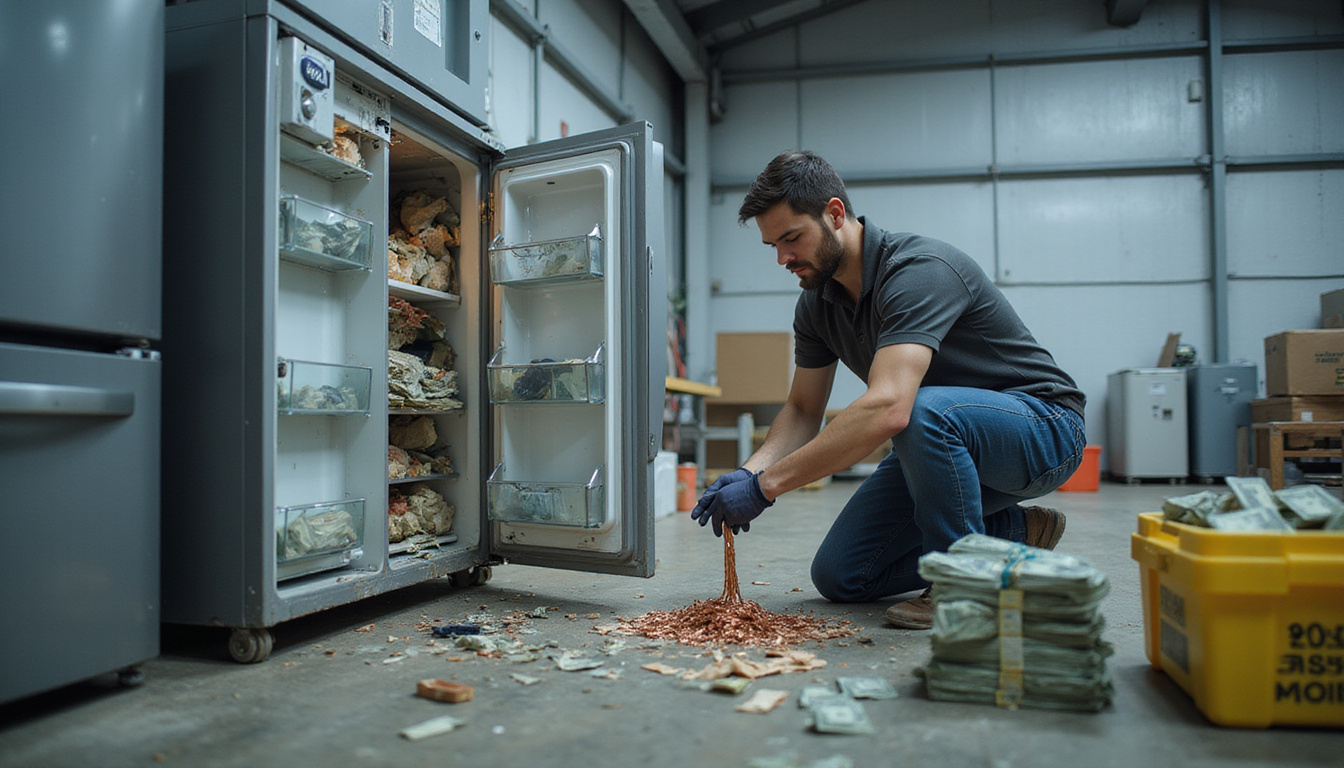
2. Collect Appliances
Sources include:
- Your own home (old, broken, or replaced units)
- Friends, family, and neighbors who are upgrading
- Local online classifieds and free groups (e.g., “curb alerts”)
- Property managers or small contractors replacing units
- Garage sales and moving sales (often give away “broken” appliances just to get rid of them)
Always be clear about pickup terms and get permission before taking anything from private property.
3. Decide: Whole Unit vs. Disassembly
Whole appliance scrapping:
- Fast and simple
- Lower payout, but minimal time and tools
- Ideal if you’re short on time or experience
Disassembling appliances:
- Higher payouts by separating metal types
- Requires basic tools (screwdrivers, wrenches, pliers, maybe a drill)
- Takes more time and some space to work
For many people, the sweet spot is to:
- Leave large, sealed appliances mostly intact (especially those with refrigerant)
- Remove easy-to-access, high-value items such as:
- Power cords (copper wiring)
- Motors (washing machines, dishwashers)
- Compressors (if refrigerant is already properly evacuated)
Maximizing Profit: Separate Your Metals
Once you’re comfortable with appliance scrapping, organizing metals will significantly improve your earnings.
Here’s a simple way to sort:
-
Ferrous Metal (Steel/Iron)
- Test with a magnet: if it sticks, it’s ferrous
- Lower price per pound but heavy and abundant
- Keep in a large bin or separate pile
-
Copper
- Found in wiring, motors, compressors
- Higher value per pound
- Strip insulation from thick copper wire if you have the time and tools (bare bright copper pays the most)
-
Aluminum
- Coils, fins in AC units, some appliance frames
- Light but reasonably valuable
- Keep separate from steel
-
Brass and Stainless Steel
- Fittings on water heaters, pipe connections, some appliance handles or trim
- Often worth more per pound than regular steel
-
Electric Motors and Compressors
- Many yards pay a set rate for intact motors and sealed compressors
- Some experienced scrappers break them down further to extract copper windings, but this takes time and effort
By separating metals before you head to the yard, you avoid “mixed metal” pricing, which is usually lower.
Legal and Environmental Considerations
When scrapping appliances, make sure you’re compliant with local regulations.
-
Refrigerant handling laws:
- In many regions, only certified technicians can remove refrigerants (CFCs, HCFCs, HFCs).
- Violations can result in fines. Always keep proof if a contractor has already evacuated a unit.
-
Illegal dumping and scavenging:
- Never take appliances from curbs or dumpsters without clear permission; local ordinances vary.
- Avoid scrapping on public property without authorization.
-
Disposal of non-metal parts:
- Plastics, glass, and insulation often have little or no scrap value.
- Follow local waste guidelines; some transfer stations and recycling centers accept these components.
Responsible appliance scrapping isn’t just ethical—it protects you from fines and community complaints.
Simple Tools to Make Appliance Scrapping Easier
You don’t need a full workshop to get started. A basic kit includes:
- Phillips and flat-head screwdrivers
- Adjustable wrench and socket set
- Pliers (regular and needle-nose)
- Wire cutters/strippers
- Utility knife
- Magnet (for sorting ferrous vs non-ferrous metals)
- Dolly or hand truck
As you scrap more, you might add a cordless drill/driver, reciprocating saw (for heavy disassembly), and sorting bins or totes.
FAQ: Common Questions About Appliance Scrapping
1. Is appliance scrapping really worth it for just a few items?
Yes. Even a single large appliance—like a refrigerator, washer, or AC unit—can yield enough metal to make the trip worthwhile, especially if you were already planning a dump run. If you regularly replace or repair appliances, or have access to a steady supply from friends or rentals, appliance scrapping can become a recurring side income.
2. Where can I take old appliances for scrapping near me?
Most communities have at least one metal scrap yard or recycling center that accepts appliances. Search for “metal scrap yard,” “appliance recycling,” or “refrigerator recycling” in your area. Some municipalities also host special appliance or e‑waste collection events where you can drop off units at reduced or no cost, sometimes with a small rebate.
3. Do I have to take appliances apart before scrapping?
No. Appliance scrapping can be as simple as dropping off whole units. Disassembly is optional but can increase your payout by separating metals like copper, aluminum, and steel. If you prefer convenience or aren’t comfortable handling refrigerants or high-voltage parts, bring whole appliances to a yard or service that specializes in safe processing.
Turn Clutter Into Cash: Start Appliance Scrapping Today
That old washer in the basement, the broken microwave in the garage, the rusted AC unit behind the house—they’re not just junk. With a basic understanding of appliance scrapping, you can turn them into quick cash, avoid disposal fees, and help reduce environmental impact.
Begin with what you already have, learn your local scrap yard’s policies, and gradually build a simple system for collecting, sorting, and hauling. Whether you’re looking for a one-time payout or a steady side hustle, appliance scrapping is a practical, beginner-friendly way to make your old machines work for you one last time.
If you’re ready to reclaim space and put money back in your wallet, start today: identify your old appliances, call a local scrap yard for current prices, and schedule your first drop-off or pickup. The sooner you start scrapping, the sooner your “junk” becomes real savings.
Junk Guys Inland Empire
Phone: 909-253-0968
Website: www.junkguysie.com
Email: junkguysie@gmail.com