
Construction Debris Recycling: How Builders Cut Costs and Supercharge Sustainability
Construction debris recycling is no longer a niche sustainability practice—it’s fast becoming a competitive advantage for builders, contractors, and developers. As regulations tighten and clients demand greener projects, companies that master waste management are cutting costs, winning bids, and protecting their reputations.
This guide walks through how to implement construction debris recycling on real-world jobs, which materials offer the best savings, and how to turn “trash” into a tool for supercharging sustainability.
Why Construction Debris Recycling Matters Now
The construction sector generates an enormous share of the world’s waste. In the U.S. alone, construction and demolition (C&D) activities produced more than 600 million tons of debris in 2018—over twice the amount of municipal solid waste (source: U.S. EPA).
Recycling that debris pays off in three major ways:
- Lower disposal costs – Landfill tipping fees keep rising, and hauling mixed loads is expensive. Diverting materials for reuse and recycling can dramatically reduce or even offset these costs.
- Stronger sustainability profile – Recycling supports LEED and other green building certifications, reduces carbon footprint, and helps win environmentally focused clients and public contracts.
- Operational efficiency – Structured debris management keeps sites cleaner and safer, reduces clutter-related delays, and fosters a culture of planning and accountability.
What Counts as Construction Debris?
Understanding what you’re generating is the first step toward effective construction debris recycling. Typical categories include:
-
Inert materials
- Concrete, masonry, bricks, and tiles
- Asphalt pavement and roofing
- Stone and aggregates
-
Metals
- Steel beams, rebar, studs
- Aluminum framing and trim
- Copper pipes, wiring, and fittings
-
Wood
- Dimensional lumber offcuts
- Pallets and crates
- Plywood, OSB, and formwork (clean, untreated where possible)
-
Plastics and packaging
- Plastic film and wrap
- Buckets, containers, and conduit scraps
- Foam and rigid insulation offcuts
-
Gypsum and drywall
- New gypsum board scrap
- Demolished but uncontaminated drywall
-
Glass and windows
- Plate glass, glazing
- Some window assemblies (depending on recycler)
-
Others
- Roofing materials
- Flooring (carpet, vinyl, tile)
- Salvageable fixtures and furnishings
Not all materials are recyclable in all markets, but almost every project can divert a significant portion of its waste stream.
The Business Case: How Recycling Cuts Construction Costs
Construction debris recycling saves money in more ways than most teams expect. The key is looking beyond just the cost of collection.
1. Reduced Landfill and Hauling Fees
Mixed C&D loads are expensive to dump. Many landfills charge higher tipping fees for unsorted debris than for source-separated or recyclable materials. When you divert concrete, metals, and clean wood, you:
- Shrink the volume of mixed waste
- Reduce the number of hauls
- Potentially negotiate better rates with haulers
Over the course of a large project or multi-year contract, these savings add up to tens or hundreds of thousands of dollars.
2. Revenue from Recyclables and Salvage
Some construction debris has real resale value:
- Metals – Steel, copper, and aluminum can be sold as scrap.
- Concrete and asphalt – Crushed material can be sold or reused as aggregate, subbase, or fill.
- Clean dimensional lumber – Can be repurposed on-site or sold to reclamation yards.
- Architectural salvage – Doors, fixtures, hardwood flooring, and specialty items often command premium prices in reuse markets.
Even when payments are modest, they help offset program costs and tip the overall financial equation in your favor.
3. Lower Material Purchase Costs
Strategic reuse keeps money in your budget:
- Reusing formwork, bracing, and blocking
- Milling offcuts for blocking or smaller components
- Reusing crushed concrete as base or backfill
- Salvaging doors, frames, or casework for non-critical applications
This kind of circular thinking reduces the volume of virgin material you need to purchase.
4. Added Value in Bids and Client Relationships
Owners and developers are increasingly required to meet waste diversion targets, particularly on public and institutional projects. Demonstrating a robust construction debris recycling plan can:
- Distinguish your bid from competitors
- Help clients achieve LEED or other certifications
- Reduce permitting friction in jurisdictions with C&D regulations
- Strengthen your brand as a responsible, modern contractor
These are “soft” benefits that often translate into hard revenue.
Core Strategies for Implementing Construction Debris Recycling
To get real savings and sustainability gains, you need a structured approach. Here’s how leading contractors design and execute effective programs.
1. Start with a Pre-Construction Waste Management Plan
Before work begins, develop a written plan that answers:
-
What will be generated?
Estimate volumes by material type for each project phase (demo, shell, interiors, finishes). -
What can be diverted?
Identify recyclable and reusable streams available in your local market. -
Who is responsible?
Assign roles: superintendent, foremen, subcontractors, and haulers/recyclers. -
How will materials be collected?
Choose between source-separated containers (by material) or commingled recycling with a certified sorting facility. -
What are the targets?
Set diversion goals (e.g., 75% by weight) and tie them to client or certification requirements.
Share this plan with all stakeholders during pre-construction meetings.
2. Choose the Right Collection System
You’ll typically choose between:
-
Source-separated recycling
- Separate bins/roll-offs for concrete, metals, wood, cardboard, etc.
- Higher purity and better pricing for recyclables
- Requires more space and discipline
-
Commingled C&D recycling
- One or few containers; materials sorted off-site by processor
- Easier on cramped sites
- Generally lower recovery rates and possibly lower revenue per ton
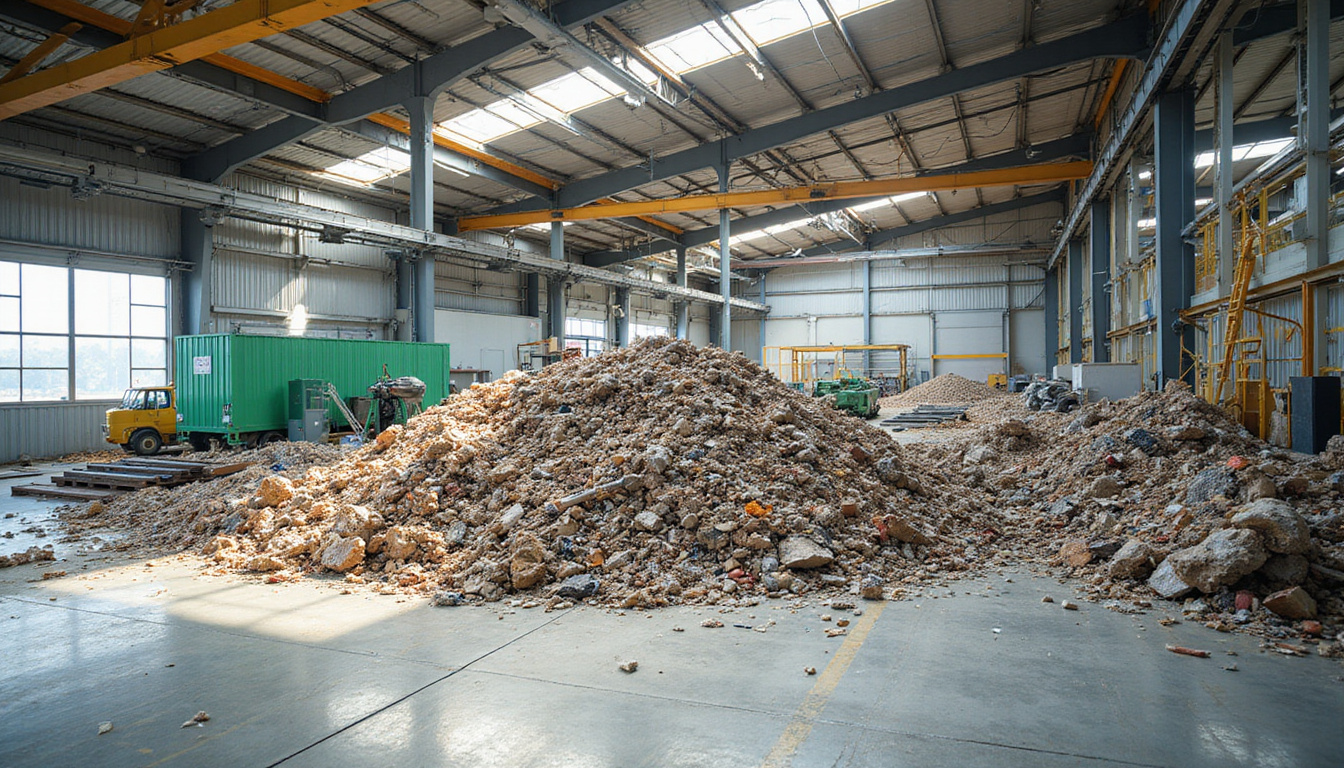
Many projects use a hybrid: source-separate high-volume, high-value materials (e.g., concrete and metal) and commingle the rest.
3. Train Crews and Subcontractors
Even the best plan fails without buy-in at ground level. Training should:
- Explain why debris recycling matters (cost, environment, compliance)
- Show workers how to sort materials correctly
- Clarify where each material goes (color-coded containers, clear signage)
- Establish accountability – e.g., subcontractors responsible for their own cleanup and compliance
Reinforce messages at toolbox talks and weekly coordination meetings.
4. Design the Site Layout for Easy Compliance
Make recycling the path of least resistance:
- Place containers near major work zones and material drop areas
- Use clear, durable signage with images and multiple languages if needed
- Keep paths to bins unobstructed
- Use smaller, mobile bins or carts for interior work that can be rolled to larger containers
If workers have to walk far or fight clutter to recycle properly, contamination rates go up and diversion goes down.
5. Track Performance and Adjust
Measure and manage your progress:
- Collect weight tickets for every haul (landfill, recycling, metals, etc.)
- Calculate diversion rates by weight and track over time
- Identify contamination or low-performing streams and fix the root causes
- Share progress reports with teams and clients
Simple spreadsheets work for many contractors; larger firms may integrate debris tracking into project management platforms.
Materials with the Biggest Impact
Certain materials are especially valuable in a construction debris recycling program because they combine high volume with strong recycling markets.
Concrete and Masonry
- Often 40–70% of C&D waste by weight
- Easily crushed and reused as aggregate, base material, or fill
- Large economic and environmental payback from diversion
Metals
- High value per ton, especially copper and aluminum
- Very high recycling rates when properly sorted
- Simple to segregate: establish dedicated scrap areas early
Clean Wood
- Can be chipped for mulch, animal bedding, or biomass fuel
- Dimensional lumber can be reused on-site
- Avoid mixing painted/treated wood with clean streams
Cardboard and Packaging
- Cardboard is one of the easiest and most widely accepted recyclables
- Reducing packaging waste through supplier agreements multiplies benefits
Focusing on these core categories can often get a project above 60–70% diversion with manageable effort.
Overcoming Common Challenges
Even committed builders encounter obstacles when ramping up construction debris recycling. Most can be solved with planning and communication.
Limited Site Space
- Use smaller, more frequent pickups instead of many large containers
- Prioritize containers for high-volume materials (concrete, metals)
- Consider commingled recycling if space for multiple bins is impossible
Inconsistent Subcontractor Participation
- Make waste management requirements part of contracts and scopes of work
- Include recycling expectations in pre-job meetings
- Hold subs financially responsible for contamination or non-compliance where appropriate
Contamination of Recycling Streams
- Improve signage and bin placement
- Provide periodic on-site coaching and spot checks
- Designate a “waste champion” or steward to monitor and correct issues
Market Availability
- Some regions lack robust recycling facilities for certain materials
- Work with local haulers to understand what’s feasible
- Explore creative reuse options on-site or with local partners (e.g., landscapers, salvage yards)
Integrating Recycling with Green Building Certifications
For projects pursuing certifications like LEED, construction debris recycling is often a key pathway to earning points and demonstrating environmental performance.
Typical requirements include:
- Achieving specific diversion rates (e.g., 50–75% by weight)
- Tracking and documenting all waste and recycling streams
- Using certified C&D processing facilities where available
Even when a project is not formally pursuing certification, aligning your practices with these frameworks shows owners you’re using industry best practices.
Simple Steps to Get Started on Your Next Project
To launch or improve construction debris recycling on your upcoming job, follow this quick checklist:
- Meet with your hauler/recycler to understand local options, costs, and acceptable materials.
- Draft a waste management plan with targets, responsibilities, and collection methods.
- Build recycling requirements into subcontracts and scopes of work.
- Design your site layout to support easy separation and collection.
- Train crews and subs before work starts and reinforce regularly.
- Track dispositions and weights from day one and share results with the team.
- Refine your approach mid-project based on data and feedback.
These steps are manageable for companies of any size and can be scaled up as you gain experience.
FAQ: Construction Debris Recycling and Related Topics
1. What are the benefits of recycling construction waste for builders?
Recycling construction waste cuts landfill and hauling costs, creates potential revenue from scrap metals and aggregates, reduces material purchases through reuse, and helps builders meet sustainability and regulatory requirements. It also improves site organization and can strengthen bids for environmentally focused projects.
2. How do I set up a construction waste recycling program on my job site?
Start with a waste management plan that estimates materials, sets diversion targets, and assigns responsibilities. Coordinate with haulers and local recyclers, choose between source-separated and commingled collection, set up clearly labeled containers, train crews and subcontractors, and track waste and recycling weights throughout the project.
3. Which construction materials are the easiest to recycle or reuse?
The most straightforward materials for construction waste recycling are concrete and masonry (crushed for aggregate), metals (sold as scrap), clean wood (for reuse or biomass), and cardboard and packaging. Gypsum, glass, and plastics can also be recycled in many markets, but options vary by region.
Turn Your Debris into a Competitive Advantage
Construction debris recycling is more than an environmental checkbox; it’s a strategic tool to improve your bottom line, strengthen your brand, and future‑proof your business against rising costs and stricter regulations. By planning ahead, engaging your teams, and partnering with the right recyclers, you can turn a major cost center into a source of savings and opportunity.
If you’re ready to cut waste-related expenses and supercharge sustainability on your next project, start by mapping your debris streams and talking with local recycling partners. Build recycling expectations into your contracts, track your results, and share the wins with your clients. The sooner you integrate construction debris recycling into your standard practices, the faster you’ll see the financial and environmental returns.
Junk Guys Inland Empire
Phone: 909-253-0968
Website: www.junkguysie.com
Email: junkguysie@gmail.com