
Leaf Removal Secrets: Save Time, Money, and Your Lawn
Leaf removal isn’t just about keeping your yard tidy. Done right, it protects your grass, prevents pests, and saves you time and money over the long run. Done wrong—or skipped altogether—it can smother your lawn, create slippery walkways, and lead to expensive repairs or renovations later.
Below are practical, people-tested strategies to make leaf removal faster, cheaper, and healthier for your lawn.
Why Leaf Removal Matters More Than You Think
A light layer of leaves can act as a natural mulch. But when leaves pile up and stay on your lawn, they block sunlight, trap moisture, and reduce airflow to the grass. Over time, this can:
- Suffocate turfgrass roots
- Encourage mold, fungus, and lawn diseases
- Create a damp habitat for pests like slugs, rodents, and insects
- Kill sections of your lawn, leading to bare spots in spring
The University of Minnesota Extension notes that heavy leaf cover can actually kill grass if left through winter (source). In other words, smart leaf removal isn’t cosmetic—it’s lawn insurance.
Timing Your Leaf Removal for Maximum Benefit
Removing leaves too often wastes effort. Waiting too long can damage turf. Aim for a middle ground based on your climate and tree types.
General Timing Guidelines
- Start when 30–40% of leaves have fallen. A thin layer won’t harm healthy grass for a short period.
- Repeat every 1–2 weeks during peak drop. This prevents a thick mat from forming.
- Finish before consistent snow cover. In cold climates, try to get leaves off the lawn before the ground freezes for the season.
Watch your lawn: if you can’t see grass blades through the leaves, it’s time to act.
Raking vs. Blowing vs. Mulching: Which Is Best?
There’s no one-size-fits-all leaf removal method. The best choice depends on your yard size, tree density, budget, and physical ability.
Hand Raking
Best for: Small to medium lawns, people who want a workout, tight budgets.
Pros
- Low cost (just a rake and bags/tarp)
- Precise—you can get leaves out of garden beds and corners
- Quiet and environmentally friendly
Cons
- Time-consuming
- Physically demanding—can strain your back and shoulders
Choose a wide, lightweight, ergonomic rake to reduce fatigue and make the job faster.
Leaf Blowers
Best for: Medium to large yards, heavy leaf volume, uneven terrain.
Pros
- Fast aggregation of large leaf piles
- Reach into shrubs, landscaping, and tight spaces
- Great for wet or matted leaves that are hard to rake
Cons
- Gas models are noisy and emit fumes
- Electric models require cords or batteries
- Less precise control than raking
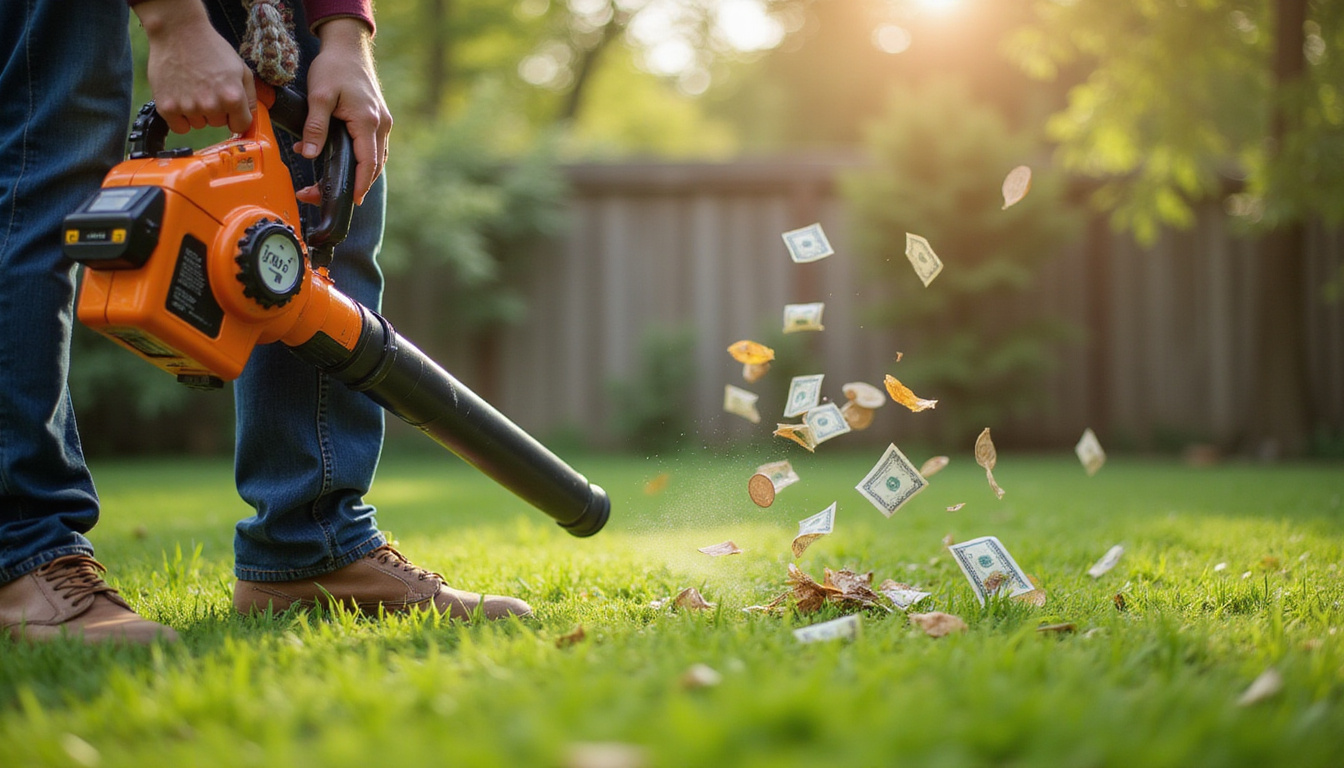
If you choose a blower, consider a battery-powered model for lower noise and no emissions.
Mulching with a Lawn Mower
Best for: Lawns with moderate leaf cover, homeowners wanting to recycle nutrients.
Instead of traditional leaf removal, you can mulch leaves directly into the lawn using a mower with a mulching blade. This chops leaves into tiny pieces that fall between the grass blades.
Pros
- Saves time (no raking, blowing, or bagging)
- Returns organic matter and nutrients to the soil
- Reduces yard waste
Cons
- Not ideal for extremely thick layers of leaves
- Requires a mower with a mulching function
- May need several passes over heavy leaf fall
Rule of thumb: if you can still see about half the grass after mulching, you’re in good shape. If not, make another pass or remove some leaves first.
How to Turn Leaf Removal into Free Lawn Fertilizer
Leaves are rich in carbon and trace nutrients. Instead of paying for disposal, you can turn them into valuable soil-building material.
Mulch Mowing Strategy
- Use a mulching mower on a dry day.
- Set your lawn mower to a slightly higher cutting height.
- Mow slowly, making overlapping passes.
- Inspect the lawn—leaves should be shredded into confetti-sized pieces.
These tiny pieces break down over fall and winter, improving soil structure and feeding beneficial microbes.
Composting Leaves
If you have too many leaves to mulch, compost the excess.
- Shred leaves first with a mower or shredder to speed decomposition.
- Mix with “green” materials like grass clippings or food scraps to balance carbon and nitrogen.
- Keep the pile moist and aerate it by turning every few weeks.
Within several months to a year, you’ll have rich compost to use in garden beds, around trees, or as a top-dressing for the lawn.
Saving Money on Leaf Removal: DIY vs. Hiring Pros
Professional leaf removal services can be a lifesaver—but they add up. Deciding whether to DIY or hire help comes down to cost, time, and your physical capacity.
When DIY Makes Sense
- You have a small or average-sized yard
- You enjoy yard work or see it as exercise
- You own basic tools (rake, mower, maybe a blower)
You’ll mainly pay in time, not money. Over a season, DIY leaf removal can save hundreds of dollars.
When Hiring Pros Is Smarter
- You have a large property or heavy tree cover
- You have health or mobility limitations
- You’re short on time or energy
Many companies offer per-visit or seasonal packages. To save:
- Get quotes from at least three providers
- Ask about discounts for recurring service
- Combine services (e.g., leaf removal plus final mow)
You can also use a hybrid approach: hire a crew for a big, late-fall cleanup, and handle smaller cleanups yourself earlier in the season.
Tools That Make Leaf Removal Faster and Easier
You don’t need fancy gear to manage leaves, but the right tools can dramatically reduce effort.
Consider investing in:
- Ergonomic leaf rake – Lightweight, with a wide head and cushioned handle.
- Mulching lawn mower – Turns leaves into fine particles in one step.
- Leaf blower or blower-vac – For bigger yards or heavy leaf fall.
- Leaf tarp or reusable leaf bag – Drag or carry large volumes at once.
- Wheeled yard cart – Easier than lifting heavy bags.
Use protective gear (gloves, eye protection, ear protection) and proper body mechanics—bend at the knees, not the waist, and avoid twisting while lifting.
Step-by-Step Leaf Removal Strategy for a Healthier Lawn
To save time and preserve your grass, follow a simple system rather than tackling leaves randomly.
- Start with the lawn. Clear or mulch the grass first to keep it healthy.
- Work downhill and downwind. Let gravity and the breeze help move leaves where you want them.
- Create central collection zones. Rake or blow leaves toward a few big piles instead of many small ones.
- Deal with wet leaves last. Focus on dry areas first; go back for damp or shaded spots as they dry.
- Mulch where you can, remove where you must. Mulch open lawn areas; remove leaves from walkways, patios, and garden beds.
- Finish with edges and beds. Use a rake or blower to clear leaves away from foundations, fences, and planting beds.
This systematic approach reduces backtracking and helps you complete the job in less time.
Avoiding Common Leaf Removal Mistakes
A few missteps can undo your efforts or harm your lawn.
Piling Leaves on the Lawn All Winter
Leaving big piles sitting on grass can suffocate and kill turf. If you’re staging leaves for pickup or compost, move piles onto driveways or bare soil, not living grass.
Bagging Every Single Leaf
Bagging all leaves for disposal wastes free organic matter. Mulch or compost as many as you reasonably can, and reserve bags for excess or contaminated leaves (e.g., from near roads with heavy traffic).
Ignoring Drainage Areas
Leaves can clog gutters, drains, and ditches, leading to water damage or ice hazards. Include these areas in your leaf removal plan, especially before heavy rains or freeze-thaw cycles.
Leaf Removal and the Environment
How you manage leaves affects more than just your yard.
- Burning leaves releases particulate matter and can be harmful to air quality and your health. Many localities restrict or ban leaf burning.
- Blowing leaves into the street or storm drains can lead to flooding and send excess nutrients into waterways, contributing to algae blooms.
- Mulching and composting keep organic matter on-site, reducing landfill use and lowering the need for synthetic fertilizers.
Whenever possible, choose mulch-mowing or composting as your primary leaf management strategies. They’re better for your lawn and the environment.
FAQs About Leaf Removal
Is it bad to leave leaves on your lawn over winter?
A thin scattering of leaves generally isn’t harmful, and mulch-mowing them can benefit the soil. But a thick, unbroken layer of leaves can smother grass, promote disease, and kill turf patches. In areas where leaves pile up, plan some form of leaf removal or mulching before winter.
What is the easiest way to remove leaves from a large yard?
For big properties, the easiest method usually combines leaf blowing and mulch mowing. Blow or rake leaves from beds and tight areas onto the open lawn, then mulch-mow them. For remaining heavy piles, use a tarp to drag them to compost areas or curbside.
Is mulching leaves better than bagging for lawn health?
Yes—mulching leaves directly into the lawn is often better than bagging, as long as leaf volume isn’t extreme. Fine leaf particles decompose, adding organic matter and a small amount of nutrients back to the soil. If leaf cover is too heavy for mulching alone, remove the excess and mulch the rest.
Make Leaf Removal Work for You—and Your Lawn
With a smart strategy, leaf removal becomes less of a chore and more of an investment in your property. By choosing the right mix of raking, blowing, and mulching, using simple tools, and timing your efforts well, you can protect your lawn, reduce waste, and even create free fertilizer from what you’d otherwise throw away.
If you’re ready to transform fall cleanups from stressful to strategic, start by assessing your yard, selecting your tools, and planning your first round of leaf removal this season. And if the job feels overwhelming, consider bringing in a professional crew for a one-time cleanup—then maintain the results yourself. Your lawn, your weekends, and your wallet will all benefit.
Junk Guys Inland Empire
Phone: 909-253-0968
Website: www.junkguysie.com
Email: junkguysie@gmail.com