
Stairlift Removal: How to Reclaim Space and Save Money
If you no longer need a stairlift or have inherited a property with one already installed, stairlift removal becomes a key step in reclaiming your staircase, improving your home’s aesthetic, and even saving money. Whether you’re preparing to sell, renovating, or simply want your stairs back to normal, understanding the removal process helps you avoid damage, unnecessary costs, and safety risks.
Why Consider Stairlift Removal?
There are several common reasons homeowners decide to remove a stairlift:
- The original user has moved or passed away
- You’re selling or renting out the property
- You’re renovating and updating your interior
- The stairlift is old, unreliable, or beyond economical repair
- You want more space and a cleaner look on your staircase
Removing a stairlift can:
- Open up your hall and stairway
- Reduce tripping hazards, especially in narrow stairwells
- Potentially earn you money through resale or recycling
- Make your home more appealing to buyers who don’t want specialist equipment
Professional vs DIY Stairlift Removal
One of the first decisions is whether to remove the stairlift yourself or hire professionals.
When to Hire a Professional
In most cases, professional stairlift removal is the safer and more cost-effective option. Consider hiring a pro if:
- The lift is curved or custom-built to your staircase
- You’re unsure about handling electrical disconnections
- The lift is heavy or on a steep staircase
- You want to preserve resale value by avoiding damage
Professionals typically:
- Isolate and disconnect power correctly
- Remove the chair unit and rail safely
- Patch any fixing holes if agreed in the quote
- Provide documentation if the lift is to be resold or reused
Using qualified technicians can prevent damage to your walls, banisters, and steps, and greatly reduces the risk of injury.
When a DIY Removal Might Be Possible
A DIY approach may be reasonable if:
- You have a straight, relatively modern stairlift
- You’re comfortable with basic tools and safety precautions
- You’ve obtained the manufacturer’s manual and wiring diagrams
However, even with a simple model, you still need to manage:
- Electrical safety (isolating the supply, removing batteries)
- Heavy components (the carriage and rail can be awkward and weighty)
- Safe disposal or storage
If you’re even slightly unsure, get at least one removal quote before trying it yourself.
Step-by-Step Overview of the Stairlift Removal Process
The exact process will differ by brand and model, but most removals follow these core steps. Do not attempt any of this without checking the manual or consulting a professional.
1. Assess the Stairlift and Access Points
- Identify the manufacturer and model (usually on a label under the seat or on the rail).
- Check if it’s straight or curved—curved rails are custom and more complex.
- Confirm how it’s powered: direct mains or via a nearby charger unit and batteries.
- Plan access routes for carrying out the rail and chair.
2. Power Down and Disconnect Safely
- Switch off the stairlift via the key or main switch.
- Isolate the electrical supply at the fuse box or breaker panel.
- Unplug any charger units or transformers from wall sockets.
- Remove onboard batteries if accessible; these are often heavy and must be recycled properly.
This stage is critical for avoiding electric shock or damage. When in doubt, use an electrician or stairlift engineer.
3. Remove the Chair and Carriage
- Move the chair to a convenient location on the rail (often at the bottom).
- Follow the manual to unlock or unclip the carriage from the rail—this may involve release levers or bolts.
- Remove the seat, armrests, and footplate if possible to reduce weight.
- Lift the carriage off the rail with assistance; never attempt this alone.
Once the chair unit is out, the staircase will already feel more open.
4. Dismantle and Remove the Rail
- Locate the rail brackets fixed to the treads, wall, or newel posts.
- Unscrew the brackets carefully, supporting the rail as you work.
- On curved systems, remove sections in sequence, labelling them if the lift will be reused.
- Carry the rail pieces out of the house, using two people for long or heavy sections.
Avoid dragging rails along walls or bannisters to prevent cosmetic damage.
5. Remove Fixings and Make Good
Once the main components are out:
- Remove any remaining brackets, wall plates, and cable clips.
- Fill screw holes in walls and banisters with appropriate filler.
- Fill and sand any tread or riser holes before repainting or refinishing.
- Tidy cables and restore skirting boards or trims if they were altered.
A good professional removal often includes basic “making good” works, but confirm this in writing before booking.
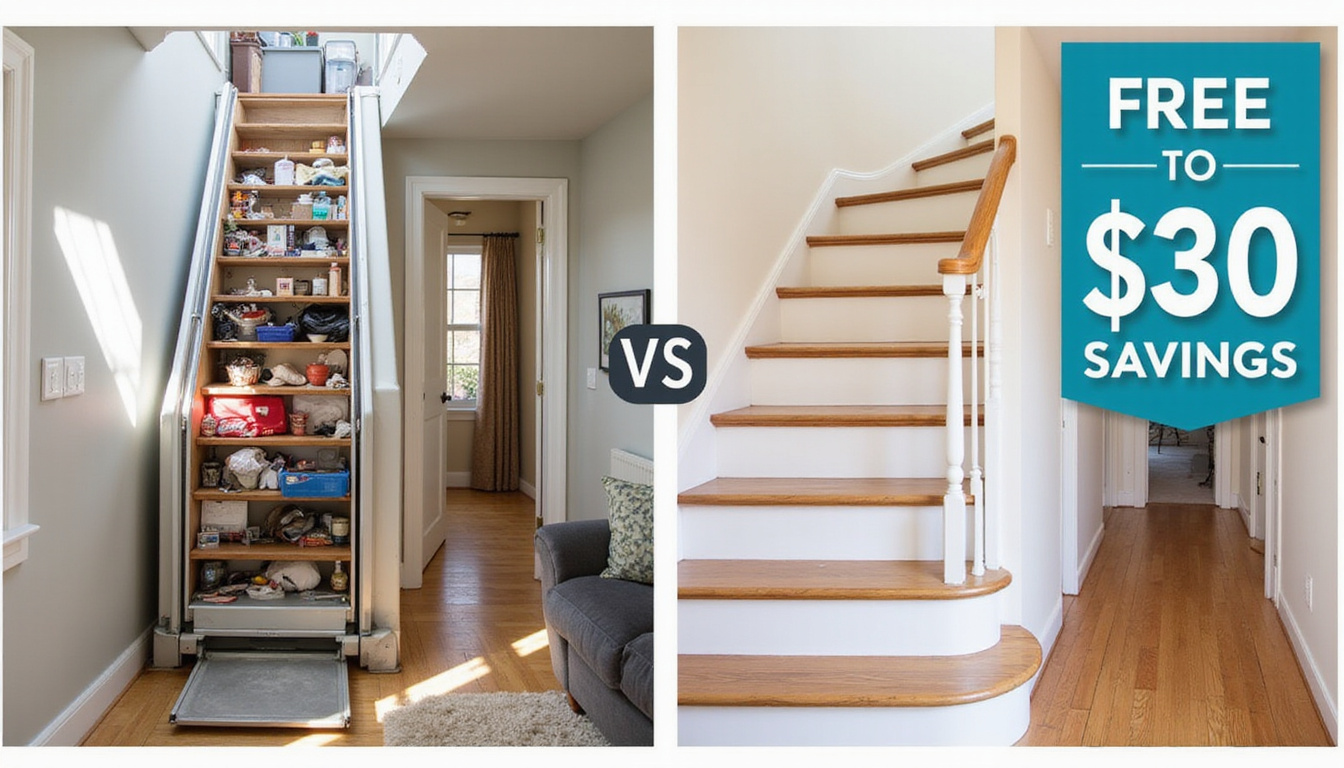
Costs of Stairlift Removal (and How to Save)
The cost of stairlift removal varies by region, type of stairlift, and the condition of your staircase.
Typical Price Ranges
- Straight stairlift removal: Often in the lower price bracket due to simplicity.
- Curved stairlift removal: Usually more expensive because of weight, complexity, and time.
Factors that affect cost:
- Whether you need urgent or out-of-hours service
- Access difficulties (tight hallways, multiple floors, no parking)
- Whether you need holes filled and cosmetic repairs
- Distance the company must travel
Many companies offer free quotes, so it’s worth comparing at least two or three.
Ways to Save Money on Stairlift Removal
-
Sell or part-exchange the stairlift
- Some suppliers or dealers buy back relatively modern, well-maintained lifts.
- Even if you don’t get a large sum, it may offset removal costs.
-
Use a company that reconditions stairlifts
- Firms that refurbish and resell equipment may remove it at a discount, or even free in some cases, if the lift has resale value.
-
Bundle with property clearances or renovations
- If you’re already paying for clearance, electrical work, or decorating, see if they’ll include the removal as part of a package.
-
Avoid damage that leads to extra repairs
- Rushed DIY jobs can cause more damage than the professional removal would have cost in the first place.
For general context on stairlifts and safe use, organizations like the Centers for Disease Control and Prevention emphasize fall prevention and accessibility in home environments, which often includes careful management of assistive devices (source: CDC – Older Adult Fall Prevention).
What to Do with a Removed Stairlift
Once the stairlift is out, you have several options for the equipment:
- Resell: If it’s modern and in good condition, dealers may buy it or accept it as a trade-in.
- Donate: Some charities, community groups, or local accessibility organizations accept used mobility equipment.
- Recycle: Metal rails and some components can be recycled. Batteries must be disposed of at proper battery recycling points.
- Dispose: If it’s very old, damaged, or obsolete, contact your local council or waste service about bulky item disposal and electronic waste rules.
Always remove personal data from any associated remotes or smart devices if applicable, and keep any documentation for the next owner if you’re selling or donating.
How Stairlift Removal Helps You Reclaim Space
Removing a stairlift is about more than just taking away a piece of equipment; it can noticeably change how your home feels and functions:
- Improved movement on the stairs: No more squeezing past the chair or rail, especially on narrow flights.
- Safer access: Fewer trip hazards from footplates, rails, and cables.
- Brighter, cleaner look: The staircase often appears wider and more inviting.
- Better home staging for sale: Buyers who don’t require mobility aids may find the space more appealing without a stairlift installed.
If you still need support using the stairs but no longer want a full stairlift, you might explore alternatives such as handrails on both sides, improved lighting, and non-slip stair treads.
Common Mistakes to Avoid During Stairlift Removal
To protect your home, your safety, and your wallet, steer clear of these pitfalls:
- Forgetting to isolate power before working on the unit
- Lifting heavy parts alone, risking injury or damage
- Cutting cables or wires rather than disconnecting them properly
- Rushing and scratching walls, bannisters, or flooring
- Failing to dispose of batteries correctly, which can be hazardous
- Not documenting the condition of the staircase before removal if you’re a landlord or selling the property
Taking a methodical approach—or hiring experts—will protect both the property and your peace of mind.
Quick Checklist: Preparing for Stairlift Removal
Use this list to get organized before booking or starting the job:
- Identify the stairlift make and model
- Decide: professional removal or DIY?
- Get at least two quotes if using a company
- Confirm what’s included (electrics, repairs, disposal)
- Clear access routes in and out of the property
- Protect nearby walls, floors, and bannisters with covers
- Arrange for resale, donation, or disposal in advance
FAQ: Stairlift Removal and Related Questions
1. How much does it cost to have a stairlift removed?
Stairlift removal cost depends on whether the lift is straight or curved, its age, and your location. Many companies charge a flat fee for a simple straight stairlift, with curved models costing more due to complexity. If the lift is relatively modern and working, a dealer may offset removal fees by buying it or removing it free in return for the equipment.
2. Can I remove a stairlift myself safely?
DIY removal of a stairlift is possible, especially for straight models, but you must be confident with basic electrics, lifting techniques, and tools. You’ll need to isolate the power, disconnect the charger, remove batteries, then lift off the carriage and unscrew the rail and brackets. If there’s any doubt, hiring a professional is safer and often prevents damage that could cost more to fix later.
3. What happens to my staircase after stairlift tracks are taken off?
After stairlift track removal, you’ll typically be left with small screw holes in the treads, risers, or walls where the brackets were fixed. These can be filled with wood filler, plaster, or appropriate compound, then sanded and repainted or refinished. A good installer or removal company may offer to “make good” as part of their service, leaving your staircase looking close to its original condition.
Reclaim Your Stairs and Your Space
If you’re living with an unused stairlift, every day you’re giving up space, style, and in some cases safety. Planned, careful stairlift removal lets you restore your staircase, refresh your home, and potentially reduce costs by reselling or recycling valuable equipment.
Start by deciding whether professional help or a guided DIY approach suits you best, then get a couple of quotes or advice from reputable stairlift specialists. Once the lift is gone and your stairs are clear, you’ll quickly feel the difference in how open and welcoming your home becomes—so take the next step today and begin planning your stairlift removal.
Junk Guys Inland Empire
Phone: 909-253-0968
Website: www.junkguysie.com
Email: junkguysie@gmail.com