
Sustainable hauling isn’t just an environmental trend—it’s rapidly becoming a competitive advantage. Whether you manage a national fleet or a small local operation, sustainable hauling can lower fuel spend, reduce wear on equipment, keep you ahead of regulations, and strengthen your reputation with customers who increasingly care about climate impact. The key is finding practical, business-friendly steps that cut emissions and operating costs.
Below is a clear, actionable guide to help you move freight more efficiently, reduce your carbon footprint, and protect your bottom line.
Why sustainable hauling is good business, not just “green”
For freight and logistics companies, margins are tight and downtime is expensive. Sustainable hauling speaks directly to those realities:
- Fuel is one of your biggest variable costs. Efficiency improvements often pay back in months, not years.
- Regulations are tightening. From state-level rules to international emissions standards, compliance is becoming non-negotiable.
- Shippers are demanding transparency. Many large brands now ask carriers for emissions data, sustainability plans, and greener options.
Viewed this way, investing in sustainable hauling is risk management, customer retention, and cost control rolled into one strategy.
Step 1: Start with data – measure what matters
You can’t improve what you don’t track. Begin your sustainable hauling journey by building a simple, consistent data foundation.
Key metrics to track
- Fuel consumption per mile / per ton-mile
- Empty miles percentage (deadhead)
- Average load factor (how “full” your loads are)
- Idling time per vehicle
- Maintenance events (unplanned vs planned)
- Emissions estimates (CO₂ per trip or per ton-mile)
Even a basic spreadsheet or low-cost telematics tool can give you enough visibility to identify your biggest opportunities.
Quick wins from better data
- Identify routes with chronic congestion or long idle times.
- Find repeat customers or lanes that produce frequent partial loads.
- Spot drivers or trucks with unusually high fuel use.
Once you know where the waste is, sustainable hauling solutions become much easier to design.
Step 2: Optimize routing and dispatch
Routing and dispatch decisions affect both cost and emissions on every single trip. Small improvements here compound quickly.
Use smart routing tools
Route optimization software can:
- Minimize total miles driven
- Avoid known bottlenecks and high-congestion corridors
- Sequence multi-stop deliveries efficiently
- Balance loads to reduce empty backhauls
Many tools now incorporate live traffic data, weather, and even low-emission zone restrictions to keep trucks moving efficiently.
Reduce empty miles
Empty or underutilized trips are a major drag on profitability and sustainability.
Tactics to cut deadhead:
- Build backhaul partnerships with complementary carriers or shippers.
- Use digital freight marketplaces to fill empty legs.
- Consolidate smaller loads into milk-run style routes where possible.
- Work with customers to increase flexibility on pickup/delivery windows, which makes consolidation easier.
Even a 5–10% reduction in empty miles can translate into significant fuel savings across a fleet.
Step 3: Focus on driver behavior and training
How trucks are driven often has as much impact on fuel use as the technology in them. Sustainable hauling depends heavily on people behind the wheel.
Fuel-efficient driving practices
Driver training and incentives should emphasize:
- Smooth acceleration and braking
- Maintaining steady highway speeds
- Minimizing idling, especially at stops and yards
- Proper gear shifting and use of cruise control where safe
- Anticipating traffic to avoid stop-and-go
The U.S. Department of Energy notes that aggressive driving can lower fuel economy by 15–30% at highway speeds (source: energy.gov). That’s a massive, low-hanging opportunity in sustainable hauling.
Telematics and feedback
Use telematics to provide:
- Individual driver scorecards for fuel use and idling
- Real-time alerts on harsh braking or acceleration
- Coaching sessions using concrete trip data
Pair data with positive incentives—bonuses or recognition for top-performing drivers—rather than only using it for corrective action.
Step 4: Maintain equipment for efficiency and longevity
Well-maintained equipment burns less fuel, lasts longer, and breaks down less often. Intelligent maintenance is essential to sustainable hauling because it prevents waste before it occurs.
Maintenance practices that save fuel
- Tire pressure: Underinflation increases rolling resistance and fuel use.
- Wheel alignment: Misalignment creates drag and uneven tire wear.
- Aerodynamic add-ons: Fairings, side skirts, and tail devices cut wind resistance.
- Lubricants and filters: Following recommended fluids and filter schedules keeps engines at peak efficiency.
A preventive maintenance schedule based on engine hours, miles, and usage patterns typically yields higher uptime and better MPG than purely reactive repairs.
Upgrade strategically
Not every truck needs to be replaced immediately. Instead:
- Prioritize upgrades for high-mileage routes where efficiency gains pay back fastest.
- Consider low-rolling-resistance tires, aero improvements, and idle-reduction technologies (auxiliary power units, cab heaters) as mid-cost upgrades that deliver recurring savings.
Step 5: Improve loading, packaging, and equipment utilization
Every cubic foot and every pound you move consumes fuel. Sustainable hauling means moving more product with the same (or less) fuel.
Increase load factor
- Collaborate with shippers to standardize pallet and packaging sizes.
- Use load-planning software to optimize cube utilization.
- Encourage shippers to avoid excessive air in packaging and consolidate shipments where timing allows.
Right-size vehicles and equipment
Using a truck that’s larger than needed wastes fuel; one that’s too small leads to multiple trips.
Consider:
- Matching vehicle size to predictable route volumes.
- Using straight trucks, vans, or box trucks for light urban routes instead of full tractor-trailers.
- Deploying trailers with lift gates or movable decks to maximize usable space.
Optimized equipment utilization often reveals that you can handle the same volume with fewer total miles and fewer trucks.
Step 6: Plan for alternative fuels and low-emission technologies
Alternative fuels and electrification are central to the long-term future of sustainable hauling. The right time to explore them is now, even if you adopt gradually.
Where alternative drivetrains make sense
- Battery-electric trucks: Ideal for short-haul, urban delivery, and return-to-base operations where charging is easy to schedule.
- Compressed Natural Gas (CNG) / Renewable Natural Gas (RNG): Potential fit for regional or vocational fleets with centralized fueling.
- Hybrid systems: Useful where frequent stopping and starting allow regenerative braking to shine.
Evaluate each technology against:
- Route lengths and duty cycles
- Payload requirements
- Local incentives and infrastructure
- Total cost of ownership over the vehicle’s life
Use pilots, not assumptions
Start with a pilot program:
- Test a small number of vehicles on well-understood routes.
- Track uptime, range, driver feedback, and real-world operating costs.
- Adjust route planning and charging/fueling strategies based on results.
A measured, data-driven approach prevents costly missteps while positioning you ahead of competitors as technologies mature.
Step 7: Reduce idling and terminal inefficiencies
Idling burns fuel while delivering zero value. So does disorganized yard and dock activity.
Idling reduction strategies
- Set and enforce idling limits in company policy.
- Use automatic engine shut-off systems where appropriate.
- Install APUs or cab comfort systems so drivers can maintain temperature without running the main engine.
- Work with customers to speed up loading and unloading, reducing waiting time.
Smarter yard and terminal operations
- Use yard management systems or simple visual controls to reduce time spent searching for trailers or docks.
- Schedule staggered dock appointments to avoid queues.
- Design site layouts with efficient vehicle flow in mind—fewer stops, reversals, and tight maneuvers.
Small operational adjustments at your facilities can significantly support overall sustainable hauling performance.
Step 8: Collaborate across the supply chain
You can’t optimize what you don’t control—and in freight, many emissions drivers (packaging, order patterns, delivery windows) sit upstream or downstream from the carrier.
Work with shippers and receivers
Collaborate on:
- More flexible delivery windows, allowing you to consolidate loads and avoid peak traffic.
- Order / shipment consolidation to reduce total trips.
- Better dock operations, including appointment systems and night or off-peak receiving.
Transparency and shared goals
Share basic data with partners:
- Emissions per shipment or per ton-mile
- Load factors and empty-mile percentages
- On-time performance alongside sustainability metrics
Sustainable hauling becomes much easier when customers see how their choices (rush orders, half-empty LTL shipments, rigid time slots) influence costs and emissions.
Step 9: Track, report, and improve continuously
Sustainability isn’t a one-time project. Treat it like any core business initiative: measure, review, refine.
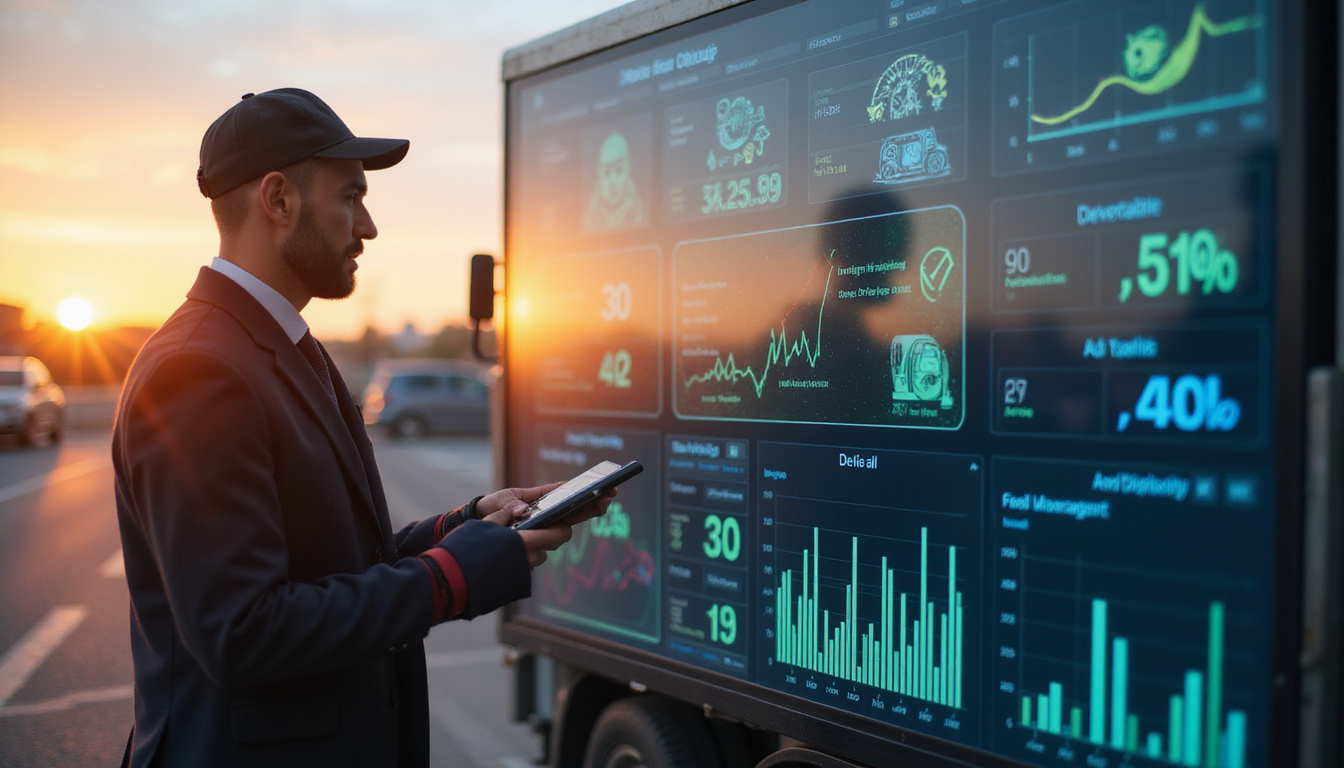
Build a simple sustainability dashboard
Include:
- Fuel use and fuel spend trends
- Emissions estimates over time
- Progress toward internal targets (e.g., 10% MPG improvement in three years)
- Adoption rate of new technologies or processes
Review results with operations managers, dispatch, maintenance, and leadership regularly. Discuss what’s working, where obstacles lie, and which pilots to scale next.
Communicate your progress
Share your sustainable hauling achievements with:
- Current and prospective customers in RFPs and sales conversations
- Employees and drivers, to build pride and engagement
- Local communities and industry associations, to attract partnerships and talent
Be transparent and grounded in data; avoid vague claims. Solid numbers inspire confidence.
Practical checklist: first steps toward sustainable hauling
Use this quick list to prioritize immediate actions:
- Start tracking fuel per mile, empty miles, idling time, and load factors.
- Implement or refine route optimization and backhaul planning.
- Launch a driver fuel-efficiency training and incentive program.
- Tighten preventive maintenance, focusing on tires, alignment, and aerodynamics.
- Work with shippers to increase load utilization and reduce partial shipments.
- Introduce an idling reduction policy and invest in APUs where justified.
- Pilot at least one low- or zero-emission vehicle on a suitable route.
- Build a simple sustainability dashboard to track progress quarterly.
FAQ: sustainable hauling and low-emission freight
1. What is sustainable hauling in trucking and logistics?
Sustainable hauling is the practice of moving freight in ways that reduce environmental impact while maintaining or improving cost efficiency and service. It includes fuel-efficient driving, optimized routing, better load utilization, preventive maintenance, and adoption of low- or zero-emission technologies where they make sense.
2. How can a small fleet start with sustainable freight hauling?
Smaller operators can begin sustainable freight hauling by focusing on low-cost changes: monitor fuel use, cut idling, optimize routes with affordable software or apps, maintain proper tire pressure, and seek backhaul opportunities. These steps require modest investment but can quickly improve both fuel economy and profitability.
3. Are eco-friendly hauling solutions more expensive in the long run?
Eco-friendly hauling solutions can involve higher upfront costs (for example, more efficient trucks or electric vehicles), but they often reduce total cost of ownership through lower fuel use, reduced maintenance, incentives, and stronger customer demand. When evaluated across the full vehicle life, many sustainable options are cost competitive or even cheaper than conventional setups.
Make sustainable hauling your competitive edge
The transition to more sustainable hauling is already underway across the freight industry. The question isn’t whether it will affect your operation—it’s whether you’ll use it to get ahead or struggle to catch up.
By tightening your data, optimizing routes and loads, empowering drivers, maintaining equipment intelligently, piloting cleaner technologies, and collaborating with customers, you can cut fuel spend, reduce downtime, and lower emissions all at once.
If you’re ready to turn sustainable hauling into a strategic advantage, start with a focused assessment of your current operations, set a few clear efficiency and emissions targets, and map out your first round of improvements. Then, keep iterating. The fleets that move earliest and learn fastest will win the contracts, retain the best drivers, and lead the market as sustainability becomes the standard, not the exception.
Junk Guys Inland Empire
Phone: 909-253-0968
Website: www.junkguysie.com
Email: junkguysie@gmail.com